Feb 10, 2026

For homebuilding executives, the key to scaling growth isn't generating more leads—it's closing the operational gaps that stall qualified buyers after their first meeting. The real bottleneck isn't at the top of the funnel. It's the fragmented, manual journey from that initial appointment to a signed contract where high-value prospects lose momentum and sales velocity grinds to a halt.
This operational friction costs you more than just time; it’s a direct drain on revenue. Every delayed follow-up and inconsistent answer creates doubt, opening the door for competitors. This guide provides a framework for fixing the post-appointment experience to improve your homebuilder sales conversion rate, shorten sales cycles, and build a more predictable growth engine.
Pinpointing the Real Drag on Your Sales Velocity
Most builders have a well-oiled machine for generating leads and setting appointments. The breakdown happens immediately after. The process degrades into a series of one-off emails, scattered spreadsheets, and manual follow-ups from individual sales agents, creating an inconsistent and often frustrating buyer experience.
This operational drag buries sales teams in low-value administrative work, reducing their capacity for meaningful conversations that advance a deal. The result is a longer, less predictable sales cycle and a frustrated team. The friction isn't a minor annoyance; it’s a strategic liability.
The Conversion Gap Hiding in Plain Sight
It’s a common frustration: a strong start that fizzles into a weak finish. Industry benchmarks tell a stark story for homebuilders. While lead-to-appointment conversion is a respectable 40%, the appointment-to-sale rate sits at just 18%.
This data confirms the post-appointment experience is broken. If you want to dig deeper into the numbers, we have a comprehensive guide on mastering your lead to sale conversion rate on our blog.
The issue is rarely the skill of your salespeople. It's the absence of a standardized, scalable playbook. When every agent manages their pipeline their own way, you cannot deliver a consistent brand experience. This fragmentation is the root cause of familiar pain points:
Inconsistent Follow-Ups: Buyers receive different information and response times depending on the agent, eroding trust at a critical decision point.
Lack of Visibility: Leadership has no real-time insight into buyer engagement, making it nearly impossible to forecast accurately or intervene to save a deal at risk.
Repetitive Manual Work: Sales teams are stuck answering the same basic questions—work that should be automated—which limits their capacity to focus on high-impact activities.
This is where most builders see the experience break down. It’s the type of lifecycle gap modern customer experience platforms are designed to solve by connecting systems and orchestrating workflows.
Shifting from Manual Effort to an Integrated Operating Model
Solving this problem requires more than another round of sales training; it demands a strategic shift in your operating model. The goal is to build an integrated system that delivers visibility and consistency from the first meeting through closing. You can learn more about simplifying these operations with effective real estate workflow automation.
An integrated approach connects your CRM, sales workflows, and all buyer communication into one cohesive journey. By orchestrating this process, you eliminate guesswork for your team and provide a professional, reassuring experience for buyers. This isn't about replacing your core systems; it's about adding the connective tissue that makes them work together to accelerate your homebuilder sales conversion rate and scale operations without scaling headcount.
Standardizing Follow-Up to Shorten Your Time to Close
Inconsistent follow-up is the silent killer of sales velocity. When every agent operates from their personal inbox and relies on manual reminders, the buyer experience becomes unpredictable and impossible to scale. Genuinely interested buyers don't leave over price or product; they slip through the cracks due to a lack of professional, consistent engagement.
Standardizing the post-appointment journey is the single most effective lever for improving your homebuilder sales conversion rate. It replaces administrative guesswork with a predictable, automated process that nurtures buyers, builds confidence, and frees your sales team to focus on selling.
Mapping the Post-Appointment Journey
First, map every critical touchpoint from the moment a buyer leaves your sales center to the contract signing. This isn’t about micromanaging your team; it’s about building a supportive system that pinpoints repetitive communication moments ideal for automation.
A crucial part of closing deals faster is having a solid lead follow-up service in place. It’s the safety net that ensures no prospect goes cold simply because an email was forgotten.
Key touchpoints to standardize immediately include:
The Immediate "Thank You": An automated, personalized email sent within an hour of the appointment, recapping the conversation and outlining next steps.
Automated Information Delivery: When an agent updates a status in your CRM, it should trigger the automatic delivery of requested documents like floor plans, community info, or pricing sheets.
Next-Step Reminders: Gentle, automated nudges about upcoming deadlines or actions keep the process moving forward without manual tracking.
Value-Add Content: Scheduled emails with homeowner testimonials or community highlights keep your brand top-of-mind during their decision-making process.
This visual breaks down the typical homebuilder sales funnel, showing how quickly that initial pool of leads shrinks by the time you get to a closed sale.
That drop-off between appointments and sales is where a structured, automated follow-up process makes all the difference.
From Manual Tasks to Automated Workflows
The real impact comes from orchestration. When you connect your CRM to a customer experience platform, you create intelligent workflows that react to buyer actions and team updates. For a deeper dive, our guide explains in detail what is workflow automation software and why it's a game-changer for builders.
This model shifts your sales process from reactive to proactive. Instead of relying on memory and checklists, your team operates within a system that ensures every buyer receives the right message at the right time. That consistency shortens the time to close and builds the trust required for a six- or seven-figure commitment.
Using Digital Experiences to Increase Buyer Commitment
Today’s homebuyers expect seamless digital experiences. They manage investments from an app and track a pizza to their door. When making a six- or seven-figure home purchase, they expect a modern process that builds confidence, not one that relies on static PDFs and a messy inbox.
Failing to meet this expectation creates unnecessary friction and doubt at a critical decision point. Interactive digital tools are no longer a novelty; they are essential for securing buyer commitment and measurably improving your homebuilder sales conversion rate.
From Abstract Ideas to Concrete Visualization
The biggest hurdle in the sales process is helping a buyer visualize their future home. Floor plans and spec sheets are abstract, leaving too much to the imagination. Interactive visualizers and 3D walkthroughs make that vision tangible.
When a buyer can digitally walk through their potential home, swap out finishes, and see structural options in real-time, their emotional connection deepens. They shift from being a passive prospect to an active participant in designing their home.
This shift has a direct impact on sales. Homeowners who engage with interactive visualizers are 2.5 times more likely to convert. More advanced AI-powered 3D content has been shown to boost conversion rates by up to 94%.
This isn't about cool tech; it's about providing the confidence and clarity buyers need to commit faster. Integrated, white-labeled platforms make this scalable without adding complexity.
These tools serve distinct operational purposes that drive the sale forward.
Key Digital Tools and Their Business Impact
Putting interactive experiences in front of buyers delivers real outcomes for your sales team, moving past simple engagement to active qualification.
Interactive Floor Plans: These allow buyers to experiment with layouts and options, providing your sales team with invaluable data on their preferences. This insight enables tailored follow-up conversations.
3D Walkthroughs and Virtual Tours: Buyers can explore a home's flow and feel from anywhere. This acts as a powerful pre-qualifier, ensuring in-person visits are more productive and decision-focused.
Online Design Centers: A portal where buyers can browse and save their favorite selections—cabinets, countertops, flooring—creates psychological investment in the home long before a contract is signed.
By integrating these tools, you are guiding a decision, not just showing a product. For a complete look at how this fits into a larger strategy, read our overview of the Foundation buyer experience platform.
Connecting Digital Tools to an Integrated Experience
The real advantage comes from connecting these visualization tools to a unified customer journey. When a buyer saves their favorite design selections, that data must flow directly into their profile within your customer experience platform, not remain in a silo.
This integration empowers your sales team to have richer, more informed conversations. They can see which features a buyer is most excited about and proactively address questions tied to those specific choices. This creates a seamless feedback loop where digital engagement directly fuels sales momentum, turning disconnected touchpoints into a cohesive, persuasive experience.
Connecting Sales and Construction for a Seamless Journey
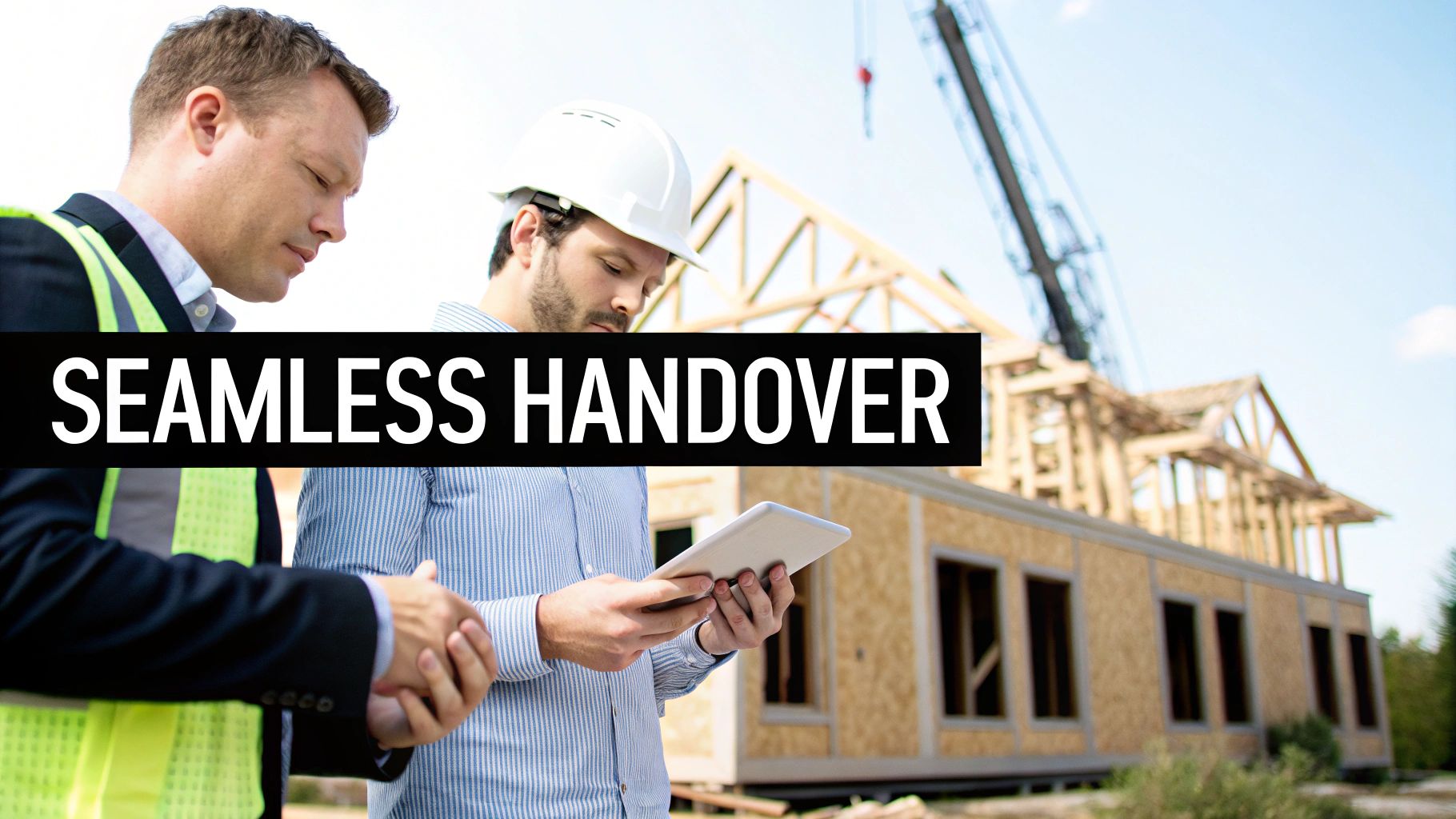
Signing the purchase agreement is a critical milestone, but the deal is most vulnerable in the phase that follows. The handoff from sales to construction is a notorious black hole where communication goes dark, buyer anxiety spikes, and the trust your sales team built evaporates.
This is where buyer’s remorse kicks in and construction managers get buried under "just checking in" calls. This disconnect is more than inefficient; it actively harms your business and reputation. It forces buyers to chase down answers, making them feel abandoned right after making the biggest purchase of their lives.
Improving your homebuilder sales conversion strategy at this stage means shifting focus to retention.
Creating a Unified Post-Contract Workflow
The solution is a single, unified workflow from contract to closing where communication is proactive and automated. This phase requires the same strategic intensity as your pre-sale process. The goal is to create one source of truth that keeps the buyer feeling confident and informed.
A modern customer experience platform acts as the connective tissue between your CRM and construction management systems. It doesn't replace them; it orchestrates the flow of information to create a smooth, predictable journey for the buyer. (You can get a deeper look at how these systems fit together in our guide to construction enterprise resource planning.)
A connected system enables powerful capabilities:
Automated Milestone Updates: When a superintendent updates a stage in the construction software (e.g., from "Framing" to "Drywall"), a branded email is automatically triggered to the homebuyer.
Centralized Document Hub: All critical documents, from the signed contract to design selections, reside in a secure, builder-branded portal accessible to the buyer anytime.
Proactive Task Management: The system can assign tasks to the buyer, like uploading financing approval letters, and send automated reminders to maintain momentum.
The Impact of Orchestrated Communication
The operational payoff is immediate. Your team is no longer bogged down sending manual updates, freeing them to focus on their core responsibilities.
The gap between sales and construction is the type of lifecycle friction modern customer experience platforms are designed to solve. By connecting systems and automating workflows, you ensure the buyer never feels abandoned.
Consider the contrast. Without an integrated system, a buyer calls their construction manager weekly for an update. With an orchestrated workflow, that same buyer receives a "Project Progress" email every Friday, complete with photos of their home under construction.
This shift from reactive to proactive communication dramatically reduces inbound "checking in" calls. You replace buyer anxiety with excitement, reinforcing their decision to build with you at every stage. This is about protecting revenue, scaling operations, and building a brand that earns trust.
Measuring Engagement to Predict and Improve Conversions
Most homebuilder executives are managing their sales pipeline with incomplete data. You know how many appointments are set and contracts signed, but a significant visibility gap exists in between. What is happening during the weeks or months a buyer is making their decision?
Without the right data, you are managing by gut feel. To truly improve your homebuilder sales conversion rate, you must move beyond vanity metrics and focus on KPIs that signal buyer intent. This means tracking meaningful interactions within a branded buyer portal, not piecing together clues from scattered email threads. This shift provides a powerful lens into pipeline health, allowing you to identify engaged buyers, flag at-risk deals, and make data-driven decisions that lift closing rates.
Moving Beyond Opens and Clicks
Standard email metrics like open rates are nearly useless for predicting a high-stakes sale. A buyer can open every email you send and still have no real intention of moving forward. True engagement is active, not passive.
To understand who will convert, you must track specific, high-intent activities that show a buyer is seriously invested:
Document Views: How many times did they review the floor plan or standard features list? This indicates deep consideration.
Task Completions: Are they promptly uploading required documents or completing pre-contract checklists? This signals commitment.
Communication Response Times: How quickly are they replying to messages within the portal? Rapid replies signify high engagement.
Feature Interactions: Did they spend 30 minutes in the digital design center saving their favorite cabinet and countertop combinations? This is a massive buying signal.
Tracking these specific actions transforms "engagement" from a fuzzy concept into a measurable, predictive dataset. This is the kind of lifecycle visibility modern customer experience platforms provide, connecting what a buyer does directly to your sales outcomes.
Using Data to Prioritize and Intervene
With a clear view of buyer engagement, your sales team can stop treating every lead the same and focus their energy where it will make the biggest impact. This granular data allows you to segment buyers by their actual activity level.
A buyer who has viewed contract documents three times this week is likely close to signing. Conversely, a buyer who hasn't logged into their portal in ten days is a major flight risk. This visibility enables proactive sales management:
Identify Your Champions: Pinpoint highly engaged buyers who are your most likely closings for the quarter.
Flag At-Risk Deals: Receive automatic alerts when a buyer’s engagement drops, allowing a manager to intervene before the deal goes cold.
Coach More Effectively: Use engagement data to see which sales agents are keeping buyers active post-appointment and which may need support.
Industry benchmarks for real estate services show a typical conversion rate around 20.55%, but lead quality is a major factor. Referrals convert at 25.56%, while cold calls are down at 9.38%. You can explore these industry conversion rate insights to see how different lead sources perform. This underscores the value of identifying and nurturing high-intent buyers through engagement tracking.
Ultimately, measuring what happens between meetings gives you the power to influence the final outcome. To go deeper on this, check out our guide on how to measure customer engagement effectively. By focusing on meaningful interactions, you turn your customer experience platform into a predictive engine for a healthier sales pipeline.
Turning Conversion Wins into Long-Term Growth
Improving your homebuilder sales conversion rate is a critical operational win. It strengthens financials, boosts team morale, and makes revenue more predictable. But framing this only as a sales metric misses the larger strategic opportunity. The real value comes when a smooth sales experience becomes the foundation for long-term, sustainable growth.
A buyer who feels confident and informed from their first tour to closing doesn't just complete a transaction; they become an advocate for your brand. This positive momentum carries into the ownership phase and fundamentally changes the post-close dynamic. The trust built early on directly reduces friction later.
From Transaction to Relationship
When the journey from contract to keys is transparent and professional, homeowners move in feeling supported, not abandoned. This experience has a direct, measurable impact on your business long after the final payment clears.
Reduced Warranty Volume: A smooth closing and a thorough new home orientation, where buyers feel heard and educated, prevent minor issues from escalating into formal warranty claims. Proactive communication sets proper expectations and heads off the frustration that fuels most service requests.
Higher Customer Satisfaction: Homeowners who have a great buying experience are happier homeowners. This is reflected in better survey scores, stronger online reviews, and a brand that stands out in a crowded market.
Increased Referral Velocity: Happy homeowners are your most powerful and authentic marketing engine. The period right after move-in is the prime time to generate referrals. When you've delivered a stellar sales and construction journey, asking for a referral is a natural next step.
The sale isn't over when the contract is signed; it's the beginning of a long-term relationship. How you manage the journey from contract to close determines whether that relationship becomes a strategic asset or an operational drain.
Building a Resilient Growth Engine
Ultimately, owning the entire customer journey is about building a more resilient, self-sustaining business. Each seamless transaction isn’t just one-time revenue; it strengthens your brand and creates a powerful flywheel effect.
Better reviews attract better-qualified leads. Enthusiastic referrals provide a warm pipeline that converts at a higher rate and a lower cost. This strategic shift reframes homebuilder sales conversion from a short-term tactic into a long-term strategy for building brand equity. By connecting sales, construction, and warranty into one cohesive experience, you create an operating model that doesn't just close deals—it builds lasting value.
A Few Common Questions
We get these all the time from homebuilder execs. Here are some quick, straight answers about boosting sales conversion and getting the right tech in place to support your growth.
What’s a Good Sales Conversion Rate for a Homebuilder?
While this varies by market and product, top-performing builders consistently achieve a 20-25% conversion rate from appointment to signed contract. The industry average, however, often dips to 18% or lower. In nearly every case, that gap is caused by friction after the first meeting—manual follow-ups and a disconnected buyer experience.
The single most effective lever for improving this metric is to standardize and automate the journey from that first handshake to the final signature.
How Can Technology Improve Conversions Without Ripping Out Our CRM?
The right technology should integrate with your core systems, not force a replacement. A modern customer experience platform acts as a connective layer that sits on top of your existing CRM, construction management software, and ERP. It is purpose-built to orchestrate the entire buyer journey by automating communication and providing a branded digital hub for homebuyers.
A CRM is not designed for this complex, multi-stage process. This approach strengthens your sales operations without disrupting the systems of record you already depend on.
What's the Biggest Mistake Builders Make That Kills Conversions?
The most common mistake is treating sales conversion as an isolated event owned solely by the sales team. It’s not. Conversion is a continuous process that flows through sales, design, closing, and construction.
When handoffs between these teams are clunky, inconsistent, or lack transparency, buyer confidence plummets. That friction leads to delays, buyer's remorse, and costly cancellations. A unified, transparent process is the only way to protect the revenue you work so hard to generate.
Ready to turn more of your appointments into closed homes? Foundation is the customer experience layer that connects your teams and systems, automates the buyer journey, and gives you the clear line of sight you need to scale.
Discover how Foundation can boost your sales velocity today.
More from Foundation

Technology
What's New - September 2026
WarrantyOS, from work order to payment. September’s updates bring more of the day-to-day warranty workflow into one connected experience.
Sep 30, 2026

Marketing
New Home Portal: A Builder's Guide to the Buyer Journey
Learn what a new home portal is, the core features builders need, and how it shapes the buyer-to-owner experience across closing and early ownership.
Sep 16, 2026

Marketing
Home Warranty Software: A Practical Buyer's Guide
Compare home warranty software for homebuilders. Evaluate work orders, vendor coordination, customer communication, integrations, and implementation.
Sep 15, 2026