Jan 21, 2026

Your lead to sale conversion rate is more than a sales or marketing KPI. For homebuilding executives, it's a direct measure of your operational health, brand integrity, and the quality of your customer experience. It reveals how effectively your teams turn a prospect's initial interest into a signed contract and a successful closing.
Why Your Conversion Rate Is a Critical Business Metric
In the homebuilding industry, the lead to sale conversion rate is a powerful indicator of your company's ability to create value. It’s a direct reflection of your capacity to translate market interest into predictable revenue.
A high conversion rate signals a seamless, trustworthy process that guides buyers from initial inquiry to purchase agreement with confidence. Conversely, a low or stagnant rate points to systemic friction that erodes profitability and brand reputation. These issues are rarely isolated; they are the result of fragmented communication, manual follow-ups, and an inconsistent brand experience as buyers move between sales, construction, and closing teams. When a promising lead goes cold, it's often due to a slow response, confusing updates, or a complete lack of visibility into their future home.
The Ripple Effect of an Optimized Conversion Rate
Optimizing this metric creates a powerful ripple effect across your entire business. Leaders who strategically improve the buyer's journey unlock immediate and long-term benefits that extend far beyond hitting quarterly sales targets.
Consider the strategic outcomes:
Increased Sales Velocity: A frictionless buyer journey accelerates the entire cycle from lead to closing, pulling revenue forward and improving cash flow.
Greater Operating Leverage: By standardizing communication and automating routine updates, your existing team can manage a higher volume of buyers without adding headcount, driving significant bottom-line impact.
Enhanced Team Capacity: Freeing your sales and closing coordinators from manual follow-ups allows them to focus on high-value activities like nurturing new leads and navigating complex deals.
Predictable Revenue Growth: A stable and improving conversion rate makes forecasting more accurate, enabling confident strategic decisions on land acquisition, material procurement, and team expansion.
Ultimately, a superior customer experience is your most effective conversion tool. It transforms the complex and often stressful process of buying a new home into a clear, reassuring journey. This builds the trust necessary not only to close the sale but also to generate a pipeline of high-quality referrals, turning a single transaction into a long-term revenue asset. This is not about incremental adjustments; it's about architecting a high-performance engine for sustainable growth.
Diagnosing Bottlenecks in the Homebuyer Journey
Before you can improve your lead to sale conversion rate, you must identify precisely where your process is breaking down. The homebuyer's journey is long and complex, filled with potential for miscommunication, delays, and deal-killing friction. Pinpointing these specific bottlenecks is the first step toward building a more efficient and profitable sales engine.
A high-performing conversion strategy requires optimizing the entire buyer lifecycle, from the first touchpoint to long after closing.
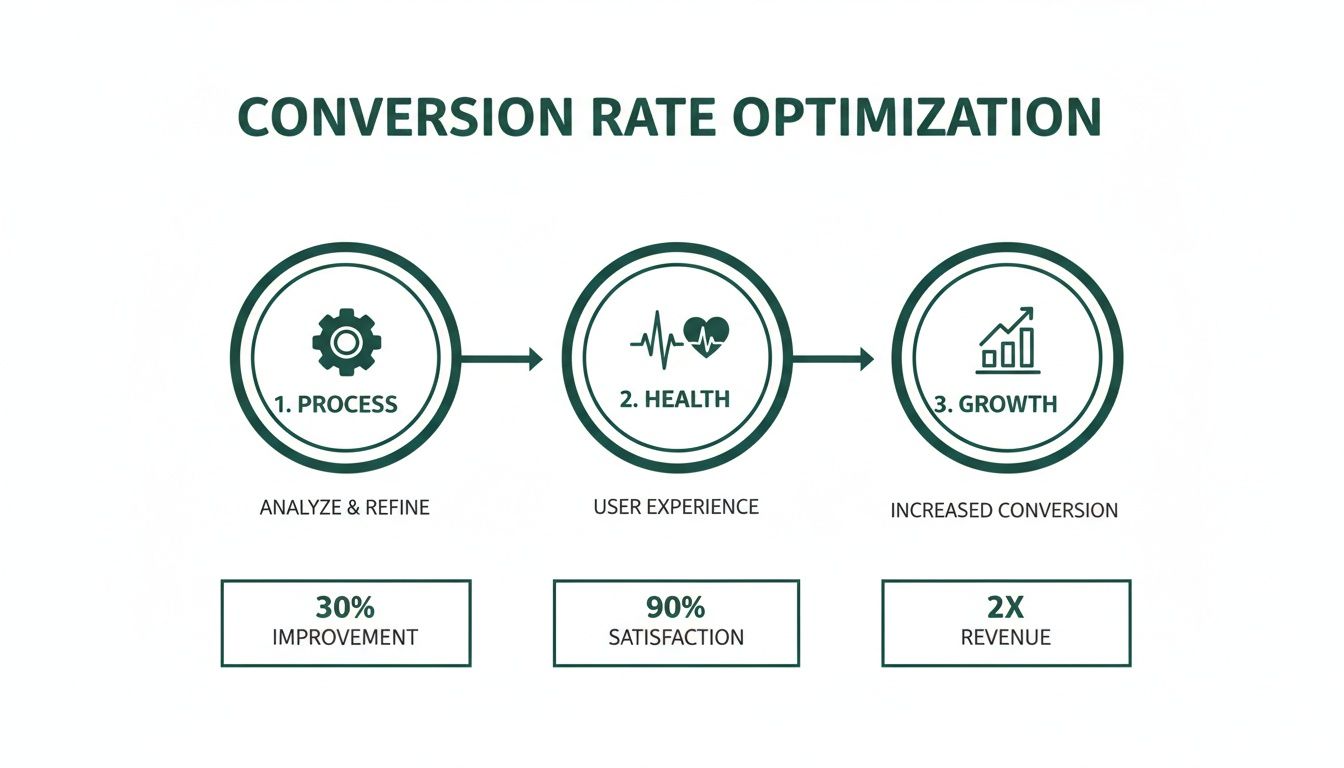
This visual connects a builder’s internal operations directly to customer satisfaction and revenue growth, illustrating that operational excellence is the engine of profitability.
Every interaction matters. A small breakdown in one stage can create significant challenges later. Let's examine the journey and identify common failure points.
The table below outlines the common operational failures that impact conversion at each stage of the homebuying process.
Common Conversion Bottlenecks in the Homebuyer Journey
Stage | Common Bottleneck | Impact on Conversion Rate | Executive-Level Consequence |
|---|---|---|---|
Lead & Nurturing | Slow or inconsistent lead response times. | Leads go cold or choose a faster competitor. | Wasted marketing spend and a shrinking sales pipeline. |
Contract to Closing | Fragmented, reactive communication; lack of transparency. | Buyer anxiety and remorse lead to contract cancellations. | Increased risk of fall-throughs and damage to brand reputation. |
Construction | Inconsistent updates and a disconnected brand experience. | Erodes buyer trust and confidence in the builder's ability to deliver. | Higher rate of concessions and customer escalations. |
Post-Closing | Disorganized warranty process and poor homeowner support. | Kills referral potential and creates brand detractors. | Lost opportunity for low-cost lead generation and repeat business. |
Understanding these bottlenecks is the first step. Next, let's explore why they happen and the damage they cause.
Stage 1: Lead Response and Nurturing
The journey begins the moment a potential buyer expresses interest. For many builders, this is where the greatest opportunities are lost. Slow, inconsistent, or impersonal follow-up is an invitation for motivated buyers to engage with a more responsive competitor.
Speed is paramount. Responding to an online lead within five minutes can increase conversion rates dramatically—some reports show by as much as 900%. Given that 50-78% of buyers choose the first company that responds, slow teams are often eliminated before they even have a chance to compete.
Top-performing online sales programs achieve a 40% lead-to-appointment rate, which feeds the 21% appointment-to-sale conversions that can account for over half of all sales. If your team isn't engaging instantly, you are leaking qualified leads. Explore more lead conversion statistics to understand the financial impact of speed.
Stage 2: Contract to Closing
After a contract is signed, buyers often enter a period of uncertainty. This phase is filled with anxiety as they await updates on financing, appraisals, and construction. Every day of silence can feel like an eternity.
When communication is scattered across personal texts, emails, and phone calls, critical information is lost. This forces anxious buyers to chase your team for answers, creating a frustrating experience that overwhelms your staff. This operational chaos erodes trust and can lead to buyer's remorse, placing the entire deal at risk.
Stage 3: The Construction Phase
Construction is typically the longest and most emotional phase of the homebuying journey. Buyers are making one of the largest purchases of their lives, and a lack of proactive, consistent updates fuels doubt and anxiety.
The brand experience often becomes inconsistent here as well. The professional, polished sales process can be replaced by ad-hoc, informal updates from the construction team. This disconnect shatters the buyer's confidence in your ability to deliver a seamless experience from start to finish.
Executive Insight: The period between contract and closing is where operational efficiency directly translates into customer satisfaction and risk reduction. A standardized, automated communication workflow not only saves hundreds of hours for your team but also prevents deals from stalling due to preventable buyer anxiety.
Stage 4: Post-Closing and Ownership
The relationship should not end when the keys are handed over. The post-closing phase is a significant and often overlooked opportunity to build brand loyalty and generate high-value referrals. For most builders, however, this period is defined by warranty overload and disorganized homeowner support.
When new homeowners must navigate a confusing process to submit a simple service request, their final impression is one of chaos. This negative experience not only burdens your warranty team but also eliminates the possibility of that homeowner becoming a brand advocate. By neglecting the ownership experience, you are abandoning your most powerful and cost-effective source of future revenue: referrals.
Strategic Levers to Boost Your Conversion Rate
Diagnosing the bottlenecks in your conversion process is the first step. Real growth, however, comes from decisive action. Boosting your lead to sale conversion rate is not about adopting the latest technology fad; it's about implementing durable operational changes that deliver measurable results.

The most effective strategies enhance the customer experience without simply adding headcount. The goal is to replace manual, inconsistent workflows with standardized, automated processes that scale with your business.
Let's examine three high-impact levers you can pull to improve conversions, increase team efficiency, and drive long-term profitability.
Standardize the Post-Contract Experience
The period between a signed contract and closing is when your deals are most vulnerable. Buyer's remorse, fueled by anxiety and silence, is a significant threat. The best defense is a standardized, predictable post-contract journey.
Move away from relying on one-off emails and personal text messages that create confusion. Instead, provide every buyer with a single, branded digital hub for all communication, documents, and milestone tracking. This gives them the transparency they need to feel confident.
When buyers have clear visibility into the process, their confidence increases, and the likelihood of cancellation decreases significantly.
Executive Insight: Standardization is the engine of scale. A consistent post-contract communication plan not only mitigates risk but also creates a predictable, repeatable experience that strengthens your brand and frees up your team to focus on high-value sales activities.
This single strategy improves several key business metrics:
Fewer Inbound Calls: Proactive updates reduce the volume of anxious "what's happening now?" calls.
Lower Contract Fall-Through Rates: Transparency and clear communication are the ultimate antidotes to buyer's remorse.
Increased Team Capacity: Your closing coordinators can spend less time chasing information and more time managing transactions.
Automate Milestone Updates and Key Communications
Manual follow-up is the enemy of efficiency and a primary reason leads are dropped and deals stall. By automating routine updates tied to key construction and closing milestones, you can deliver a superior customer experience while significantly boosting team productivity.
Imagine a world where reaching a key construction stage—like pouring the foundation—automatically triggers a personalized, branded update to the buyer. This ensures communication is timely and professional, regardless of your team's workload.
This is not about replacing your people; it's about automating mundane tasks so your team can focus on the meaningful conversations that close deals. You can see how this works at the top of the funnel by exploring how to set up a lead generation autopilot.
The business case for automation is clear:
Time Saved: Your sales and closing teams can reclaim hundreds of hours per year, increasing their capacity to sell.
Consistency at Scale: Every buyer receives the same high-touch experience, reinforcing your brand promise across all communities.
Reduced Human Error: Automated workflows ensure critical updates are never forgotten, protecting the customer relationship.
Centralize All Buyer Communication for Full Visibility
One of the biggest blind spots for homebuilder leadership is the lack of visibility into customer communications. When conversations are scattered across personal cell phones, inboxes, and spreadsheets, you cannot measure engagement, identify at-risk buyers, or ensure a consistent brand message.
Optimizing the journey from lead to happy homeowner is critical. You can find valuable insights into effective strategies for lead conversion in real estate sales, which often begin with visibility.
By consolidating all buyer communication onto a single platform, you create a unified source of truth for every relationship. This provides a dashboard view of buyer engagement, allowing you to see who is engaged and who is disengaging.
This data enables proactive management, allowing you to address small issues before they become major problems. It transforms customer communication from an unmanageable black box into a measurable, strategic asset—a fundamental component of building long-term enterprise value.
Your Tech Stack Needs a Customer Experience Layer
Addressing bottlenecks by adding headcount or demanding more from your teams is not a sustainable solution. The real answer lies in a smarter operating model where technology provides the leverage, consistency, and scale needed for growth. This is not about adding another disconnected tool; it's about implementing a strategic customer experience layer that connects your existing systems.
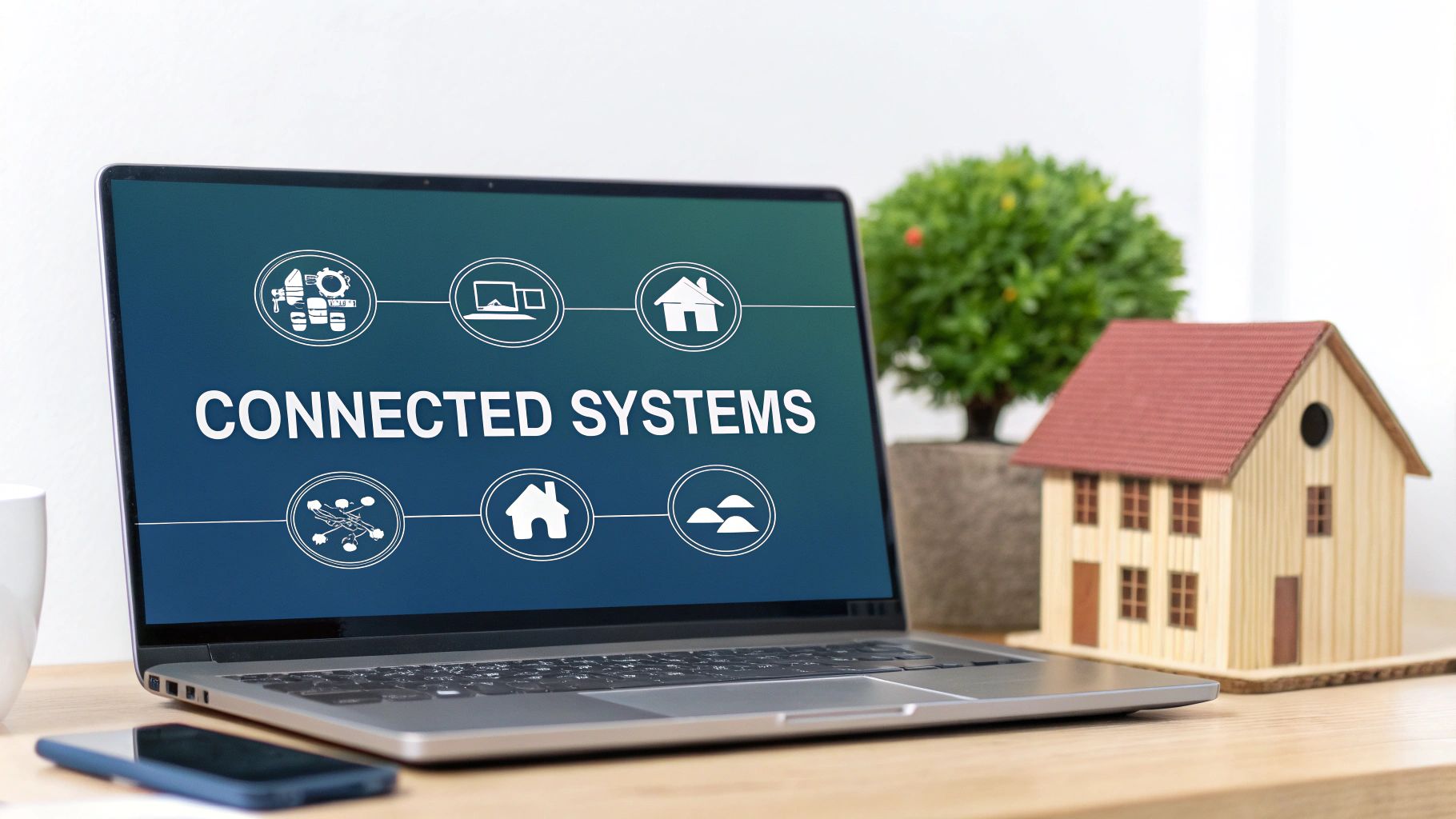
This layer does not replace your CRM, construction software, or ERP. Foundation acts as the connective tissue that links these systems, unifying the customer journey from the moment a contract is signed. It is designed to bridge the gaps where deals fail—the messy handoffs and manual follow-ups that kill momentum.
By integrating these systems, you directly address the friction points that negatively impact your lead to sale conversion rate and build an infrastructure designed for measurable business results.
From Manual Chaos to Automated Precision
Your sales coordinators and construction teams likely spend hours each week chasing information and sending one-off updates. This manual work is not only inefficient but also a breeding ground for inconsistent communication and buyer anxiety.
A dedicated experience layer automates the entire contract-to-close journey. Key construction milestones can automatically trigger personalized, branded updates to your buyers, providing the transparency they need and reducing the volume of "just checking in" calls and emails.
This shift to automation delivers significant benefits:
Time Saved at Scale: Your teams reclaim hundreds of hours annually, which can be reinvested into high-value activities that drive sales.
Consistency and Risk Reduction: Every buyer receives the same high-quality, on-brand experience, eliminating the risk of human error or mixed messages that could jeopardize a sale.
Creating a Single Source of Truth
When your team communicates with buyers across personal texts, emails, and phone calls, you have no visibility into the health of those relationships. You cannot manage what you cannot measure. This lack of oversight makes it impossible to identify at-risk buyers or coach your team effectively.
An integrated customer experience platform centralizes every conversation, creating a single, measurable record of the entire relationship. This transforms the buyer journey from an unmanageable black box into a strategic asset you can use to actively improve your lead to sale conversion rate.
This centralized view provides insight into engagement patterns, allowing you to flag disengaged buyers and ensure your message is consistent across all communities. It's about regaining control. Learn more about how a dedicated customer experience platform for homebuilders can achieve this.
Building a Scalable Operating Model
Ultimately, this technology layer represents a modern operating model designed for growth. It enables you to deliver a premium, high-touch customer experience without increasing headcount for every new home you sell. As you expand into new communities or divisions, this system ensures your brand promise scales with you.
By connecting your core systems, you create a data-driven workflow that keeps your brand, data, and customer relationships under your control. This infrastructure is key to converting more leads, boosting team capacity, and building a more resilient and profitable business.
Converting Homeowners Into Brand Advocates
The final signature at closing is not the end of the customer journey; it's the beginning of the next, more profitable phase. A successful closing is the moment a happy buyer can transform into a powerful brand advocate, fueling your most efficient growth channel.
The post-closing experience is where long-term value is either created or destroyed. A seamless, organized ownership phase cements brand trust, reduces warranty headaches, and turns homeowners into a predictable source of high-margin revenue. A chaotic experience, however, creates brand detractors and a costly drag on your operations.
The Strategic Value of the Ownership Experience
After the marathon of construction and closing, new homeowners crave simplicity and reassurance. This is precisely where many builders fail, leaving them to navigate a confusing mix of warranties, manuals, and service contacts. This friction creates immediate frustration and erodes the goodwill your team worked hard to build.
By providing every homeowner with a centralized, white-labeled digital hub, you replace chaos with clarity. This "Ownership Experience" becomes their single source of truth.
Key Documents: Contracts, floor plans, and closing papers are organized and easily accessible.
Warranty Information: Homeowners can view what’s covered and submit service requests without difficulty.
Home Details: Vital information like paint colors, appliances, and fixtures is at their fingertips.
This approach not only enhances customer satisfaction but also lifts the operational burden on your warranty and admin teams by significantly reducing inbound calls and emails.
Executive Insight: The post-close experience is a direct reflection of your company's operational maturity. A streamlined ownership hub isn't a "nice-to-have"; it's a strategic asset that minimizes warranty load, protects brand reputation, and unlocks a powerful, low-cost customer acquisition channel.
Turning Positive Experiences Into High-Converting Referrals
The ultimate goal is to create a reliable referral engine. Referrals are the engineered outcome of a consistently positive journey. When a homeowner has a frictionless experience, they are eager to share it with their network.
The data supports this strategy. Across industries, referrals boast the highest lead to sale conversion rate at 25.56%, outperforming other channels because they come with pre-built trust. For builders, an Owner Network can drive referral programs that achieve 30%+ lead-to-close rates.
A happy family sharing their positive experience generates a lead that is 25.6% likely to close, compared to just 15.73% from a PPC ad. Learn more about how conversion rates stack up across different channels.
Building a Predictable, High-Margin Growth Channel
An Owner Network, powered by a platform like Foundation, allows you to systematically re-engage with past buyers. It keeps your brand top-of-mind and simplifies the process for them to send qualified leads your way. This approach transforms referrals from a sporadic source of business into a predictable, scalable, and exceptionally high-margin growth channel.
This is not about sending a generic annual holiday email. It's about providing continuous value through an ownership hub and intelligently prompting for referrals when satisfaction is highest. By investing in the post-closing experience, you are directly investing in a sustainable pipeline of warm leads that cost less to acquire and convert at a higher rate than any other source. This is the blueprint for long-term, profitable growth.
Your Executive Blueprint for Conversion Optimization
Improving your lead to sale conversion rate requires more than a new marketing campaign or sales script; it requires a fundamental shift in your operating model. It means moving from a series of disconnected, offline interactions to a single, measurable, and scalable customer journey.
Lasting improvement requires a top-down commitment to the principle that the buyer's experience is the single greatest lever for increasing sales velocity and operational efficiency.
This is not about replacing your core systems or adding complexity. It's about connecting your existing CRM, construction software, and ERP with a customer experience layer that streamlines everything. The blueprint below offers a straightforward, actionable framework for leaders ready to build a more resilient and profitable business.
A Three-Step Framework for Lasting Growth
Focus on three high-impact areas to deliver measurable results. This approach helps identify the root causes of problems before you allocate resources, ensuring your investment targets the bottlenecks that are truly impacting revenue.
Audit the Complete Customer Journey: Map every touchpoint, from the initial website visit to post-closing. Pinpoint where communication breaks down, manual work causes delays, and buyer anxiety spikes. Pay close attention to the gaps between your systems, as this is where most deals stall.
Unify the Experience with a Connecting Layer: Seek technology that integrates with your existing tools rather than forcing a complete overhaul. A dedicated customer experience platform acts as the connective tissue between your departments, automating routine updates, centralizing communication, and creating a single source of truth for every homebuyer.
Measure What Drives Revenue: Move beyond vanity metrics and focus on what truly moves the needle: buyer engagement, satisfaction scores, and referral rates. When you can track how buyers interact at every stage, you can proactively address issues and turn happy homeowners into your most powerful sales channel.
To develop a robust plan for improving your lead-to-sale numbers, ground your strategy in the core principles of mastering conversion rate optimization.
The Path Forward: Investing in a superior customer experience is not a cost center; it is a direct investment in the long-term value of your company. A unified digital journey strengthens your brand, frees up your teams to do more, and builds a predictable, high-margin referral engine for sustainable growth.
A Few Common Questions
What Is a Good Lead to Sale Conversion Rate for a New Home Builder?
While benchmarks are useful, top-tier builders often convert 40-50% of website leads to appointments and 20-25% of those appointments into sales.
However, the most important metric is your own performance over time. A "good" lead to sale conversion rate is one that is consistently improving, demonstrating that your sales and marketing engine is becoming more efficient. The goal is to establish your baseline and work to improve it each quarter.
How Can We Improve Conversion Without Ripping Out Our Existing Systems?
This is the right strategic approach. The objective is not to replace your core systems—your CRM, construction management, and ERP software are essential to your operations. The key is to add a customer experience layer that integrates with them.
A platform like Foundation is designed for this purpose. It connects with your existing tools, pulling the right data at the right time to automate critical updates and communications. It unifies the customer journey without forcing your team to abandon the systems they rely on, acting as the connective tissue that fills the gaps where manual processes are creating risk.
How Do We Actually Measure the ROI of a Customer Experience Platform?
Measure ROI by tracking tangible business outcomes, not just software features.
Higher Sales Velocity: This is the most direct impact, visible in improved conversion rates and shorter, more predictable closing cycles.
More Efficient Teams: Track the reduction in inbound "just checking in" calls and emails. When buyers have the information they need, your sales and closing coordinators regain significant time to focus on high-value work.
Long-Term Growth: This is driven by happy homeowners. A smooth experience turns them into a reliable source of high-converting referrals, driving low-cost lead generation for years.
When you can measure metrics like time saved per team member, a reduction in contract cancellations, and an increase in referral-driven sales, the return on investment becomes clear.
Ready to turn your buyer journey into a scalable, high-conversion engine? Foundation is the customer experience layer that connects your systems, automates communication, and gives you the visibility to drive predictable growth. Schedule a demo today to see how you can increase sales velocity and operational leverage.
More from Foundation

Technology
What's New - September 2026
WarrantyOS, from work order to payment. September’s updates bring more of the day-to-day warranty workflow into one connected experience.
Sep 30, 2026

Marketing
New Home Portal: A Builder's Guide to the Buyer Journey
Learn what a new home portal is, the core features builders need, and how it shapes the buyer-to-owner experience across closing and early ownership.
Sep 16, 2026

Marketing
Home Warranty Software: A Practical Buyer's Guide
Compare home warranty software for homebuilders. Evaluate work orders, vendor coordination, customer communication, integrations, and implementation.
Sep 15, 2026