Mar 7, 2026
For homebuilder executives, effective project management residential construction isn't a back-office function—it's the engine that dictates profitability, team capacity, and brand reputation. Mastering it is what separates market leaders from builders perpetually stuck reacting to budget overruns, schedule delays, and frustrated homebuyers.
Why Traditional Project Management Fails Modern Homebuilders
For decades, the playbook for managing a build was simple: coordinate trades, get materials on site, and pass inspections. But this old-school, construction-siloed approach is cracking under the pressure of market volatility and heightened homebuyer expectations.
The symptoms are familiar to any homebuilding leader. Construction managers spend hours on the phone answering basic questions from buyers. The sales team chases post-contract information for weeks instead of generating new revenue. Teams are working hard, but operational drag is eroding margins.
The root cause is a fundamental disconnect. We have historically treated project management as a construction task, completely isolated from the customer journey that begins with the sales team.
This fragmentation creates a communication black hole the moment a contract is signed. Critical buyer details are lost across siloed systems, personal emails, and text messages. The result is inconsistent updates for the homebuyer, endless manual work for your team, and a disjointed, frustrating experience that damages your brand.
This operational friction isn't just an annoyance; it’s a direct hit to the bottom line. Every hour your team spends on repetitive, low-value communication is an hour not spent closing a sale or advancing a project schedule. This is a strategic problem that impacts team capacity and throttles growth.
The real challenge for project management in residential construction today isn’t just building a house on time and on budget. It’s achieving this while delivering a consistent, transparent, and high-quality customer experience. This requires a new playbook where project visibility extends beyond the job site to every stakeholder, especially the homebuyer.
This guide reframes project management as a strategic tool for growth. We'll explore:
The real financial impact of operational friction and poor project performance.
A modern framework for managing the entire buyer-to-owner lifecycle.
How to connect your core systems to orchestrate workflows and create a single source of truth.
The long-term value unlocked by extending project oversight beyond closing day.
Shifting from a construction-only silo to an integrated, customer-first operating model is how today's leading builders gain a sustainable competitive edge. While the specific systems matter, such as essential home builder software, the strategic goal is to build a scalable, resilient operation that elevates the customer experience and protects margins.
The High Cost of Project Underperformance
It’s easy to blame project blowouts on external factors like market volatility or supply chain snags. However, the more damaging threat is often internal: chronic project underperformance driven by operational fragmentation.
For too many builders, watching budgets and schedules spiral out of control is a recurring part of doing business. This constant margin erosion isn't just a financial headache; it’s a clear signal of a broken operating model that prevents scalable growth.
This isn't a small problem. Industry research shows that a staggering 61% of U.S. construction project owners have experienced at least one underperforming project. These aren't minor slip-ups. Projects overrun schedules by as much as 46% and exceed budgets by an average of 75%.
These numbers simply put data to what most homebuilding leaders already feel. The financial leaks are real, turning profitable projects into a desperate fight to break even.
The Real Sources of Margin Erosion
Where does the money go? It's rarely a single disaster. Instead, it’s a death-by-a-thousand-cuts caused by small, cascading failures baked into disconnected daily workflows. These issues compound, creating immense operational drag and financial risk.
We see the same pain points repeatedly:
The Sales-to-Construction Handoff: A massive communication gap exists between sales and construction. After the contract is signed, critical buyer information and expectations get lost in translation, resulting in misaligned timelines and a poor customer experience from day one.
Manual Work That Bogs Everyone Down: Relying on a patchwork of emails, spreadsheets, and phone calls for change orders or milestone updates is a recipe for delays. Every task becomes a manual chore, inviting errors and slowing progress to a crawl.
No Single Source of Truth: Ask a simple question like, "What is the status of the Johnson home?" and you’ll get five different answers. It’s nearly impossible for leadership to get a clear, real-time view of project status, budget health, or customer sentiment without chasing down multiple people.
This broken system forces your teams into a constant state of reaction. Your project managers spend their days putting out fires and answering the same questions from buyers again and again, instead of proactively managing schedules and costs.
The core problem is that information lives in different worlds. The sales team has customer context in the CRM. The construction team has project updates in their management software. With no connective tissue between them, both the customer experience and your bottom line take a direct hit.
From Reactive Firefighting to Scalable Operations
This reactive model simply doesn't scale. As you grow, communication gaps widen and manual processes collapse under the weight of more projects. Adding headcount only increases chaos and overhead without fixing the root cause. You can't scale a business on individual heroics.
The high cost of underperformance isn't just about budget overruns. It's paid in lost team capacity, a tarnished brand reputation, and missed growth opportunities. To move forward, you have to fix these foundational cracks. For a deeper analysis, see our guide on improving operational efficiency for homebuilders.
Ultimately, mastering project management residential construction means shifting from a reactive posture to a proactive, systematic one. It requires a system that connects teams, automates routine updates, and gives leaders the visibility to make strategic decisions. Without this shift, builders remain trapped—fighting the same fires on every project, unable to build a resilient and truly scalable business.
Rethinking The Project Lifecycle: A Modern Blueprint
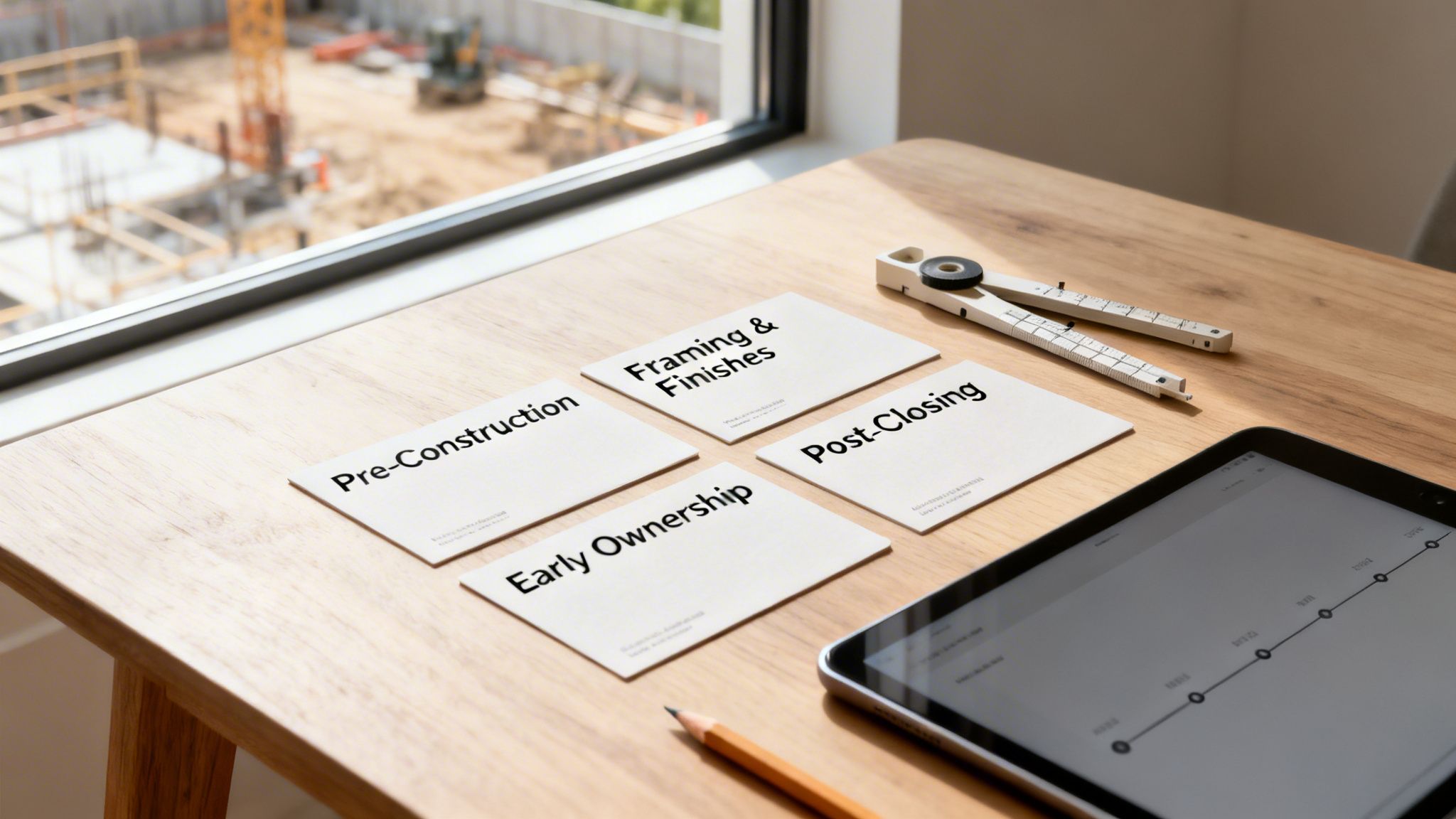
If your process is broken, you need a new set of plans. Strong project management residential construction isn’t about pushing teams harder—it’s about giving them a smarter, connected framework. This means letting go of the old construction-first mindset and embracing the entire customer journey, from contract to years post-closing.
To do this effectively, you need more than a schedule; you need an adaptive modern project construction plan that serves as a roadmap for both your operations and the buyer’s experience. By breaking the journey into distinct phases, leaders can diagnose exactly where communication breaks down and which operational snags are quietly eroding margins.
This isn't an academic exercise. This perspective is a diagnostic tool for leaders to identify process weaknesses and prioritize changes that will deliver the greatest impact. It’s a shift from managing a checklist of tasks to orchestrating a seamless end-to-end experience.
The Pre-Construction Phase
This phase sets the stage for success—or failure. It kicks off the moment a contract is signed and marks the critical handoff from sales to construction. The goal is to align internal teams and set crystal-clear expectations with the homebuyer from day one.
Typical activities include:
The Internal Handoff: Transferring all buyer information, selections, and unique contract terms from the CRM to the project team.
Buyer Onboarding: Welcoming the buyer with access to a branded, central hub where they can view their timeline, find documents, and know who to contact.
Permitting and Procurement: Initiating permit applications and placing orders for long-lead materials to stay ahead of schedule.
For most builders, this handoff is a mess of forwarded emails and hurried calls, leaving buyers anxious right after making a life-changing purchase. A modern, connected approach smooths this transition, building buyer confidence instead of confusion. This is where most builders see the experience break down.
The Construction Phase
Once construction begins, the focus shifts to execution and—critically—communication. This is the longest and most complex phase, where inconsistent updates create the most headaches for your buyers and your team.
The real goal isn't just to build the house. It's to deliver proactive, transparent updates that prevent the endless “what’s happening now?” phone calls and emails before they even start.
Imagine a construction milestone—like "Foundation Poured" or "Framing Complete"—automatically triggering a branded update to the homebuyer. This keeps the buyer informed and engaged while freeing your project manager from fielding repetitive questions. That time saved is a direct boost to operational efficiency and team capacity. The right technology makes this scalable, as detailed in our guide on integrating construction enterprise resource planning systems.
The Closing and Early Ownership Phase
The home stretch—from the pre-closing walkthrough to the first 90 days of ownership—is the final opportunity to convert a happy customer into a vocal brand advocate. The objective is a smooth, frictionless move-in that solidifies the buyer's positive experience. Too many builders treat closing as the finish line and drop the ball here.
This phase should be a guided experience:
A Digital Closing Concierge: Provide buyers a simple way to track final to-dos, schedule the walkthrough, and access closing documents in one place.
Ownership Onboarding: Seamlessly transition the buyer from their construction portal to a homeowner hub containing all documents, home specs, and warranty information.
Proactive Warranty Introduction: Introduce the warranty process and share helpful resources before a service request is ever needed.
When ownership is managed as a strategic project phase, it ceases to be a reactive cost center and becomes a powerful asset. A stellar post-close experience reduces warranty friction, builds lasting trust, and paves the way for referrals and repeat business.
Getting Your Core Systems to Actually Talk to Each Other
For a skeptical executive, the last thing needed is another piece of software creating yet another data silo. Technology should reduce complexity, not add to it. The goal is to build a more resilient, efficient, and scalable operating model.
The most forward-thinking builders are adopting a modern, four-system architecture. This isn't about ripping and replacing existing technology. Your CRM, ERP, and construction management software are essential systems of record. The shift is adding a fourth piece: a dedicated customer experience layer.
This layer acts as the connective tissue that finally gets your other systems talking. It bridges the gap between sales, construction, and the homebuyer, orchestrating workflows and creating the single source of truth that leadership teams need for strategic oversight.
The Four-System Architecture of Modern Homebuilding
Understanding this model is crucial for any leader focused on growth. Each system plays a distinct, vital role, and their power is multiplied when they work in concert.
Customer Relationship Management (CRM): Your system of record for pre-contract activities, managing leads, the sales pipeline, and initial buyer communication.
Enterprise Resource Planning (ERP): Your financial system of record, handling accounting, purchasing, and overall budget health.
Construction Management Software: Your operational command center for the build, managing schedules, trade coordination, and job site logistics.
Customer Experience Layer: The orchestration system. It plugs into the other three to automate communication and provide the buyer with a single, builder-branded portal for their entire journey.
This integrated model directly attacks the fragmentation that plagues most builders. It takes operational data from a core system—like a completed construction milestone—and automatically triggers a branded, helpful update to the homebuyer. No manual emails required.
The critical insight is this: your internal systems of record are built for your teams, not your customer. A customer experience platform translates internal operational data into a smooth, transparent journey for the homebuyer without creating more work for your staff. This is the type of lifecycle gap modern customer experience platforms are designed to solve.
From Disconnected Data to Real-Time Insight
The push for better integration is a massive market driver, with the global project portfolio management market projected to grow at a 13.0% CAGR through 2030, reflecting the industry's need to solve these chronic inefficiencies.
Platforms that digitize the homeowner journey are leading this charge, giving sales teams back weeks of time per year and providing leaders with the granular data they’ve been missing. To see how these pieces fit together, you can explore our guide to homebuilder integrations.
This model moves your operation from data chaos to strategic clarity. When your systems are connected, you gain true visibility into the entire project lifecycle. You can see exactly where a buyer is in their journey, measure engagement, and spot at-risk customers before they become a problem.
This isn’t just about happier buyers; it's a direct lever for operational efficiency. When routine updates are automated, your sales team can stop managing post-contract questions and get back to selling. Your project managers spend less time on repetitive calls and more time managing the build. This is how technology delivers a superior operating model for project management in residential construction, turning a complex process into a scalable competitive advantage.
Driving Long-Term Value Beyond Project Closing
Most builders consider the project complete at closing. The sharpest leaders know that’s where the opportunity for long-term value truly begins.
True project management in residential construction extends deep into the first years of homeownership. This isn’t merely about managing warranty claims; it’s a strategic phase that profoundly impacts your brand, future sales, and bottom line.
By treating the ownership experience as a managed project phase, you transform your warranty function from a reactive cost center into a proactive driver of customer loyalty. This loyalty is what fuels future growth. The goal is a seamless transition into ownership, managed through a central hub that keeps your brand front and center.
This single shift untangles some of the most expensive and frustrating operational headaches that arise post-closing.
Reducing Warranty Volume and Service Friction
A great post-close experience starts with proactive education, not reactive service.
When homeowners have a digital hub with all their documents, home specs, and warranty information, they can answer their own questions. This alone dramatically reduces the inbound volume of calls and emails asking for basic information that your team fields daily.
When an issue does arise, a structured service request process within a homeowner portal brings order to the chaos. No more chasing warranty claims from personal emails, texts, or voicemails. Every issue is logged, tracked, and routed through a single, consistent system.
This approach delivers significant wins:
Reduced inbound volume: Self-service empowers homeowners and frees up your team for higher-value work.
Faster resolution times: Clear, documented requests allow your team to triage and respond more efficiently.
Improved data and insights: You gain visibility into recurring issues, giving your construction team the data needed to address root causes and prevent future claims.
This transforms warranty service from a point of friction into a moment to demonstrate your commitment and build lasting trust.
Connecting Post-Close Experience to High-Level Goals
A smooth ownership experience is directly tied to the business metrics executives care about most. A superior post-move-in experience creates brand advocates who drive your most valuable source of growth.
The connection is clear: a homeowner who feels supported and valued long after closing is significantly more likely to leave a positive review, refer friends and family, and consider your company for their next home purchase.
This creates a powerful virtuous cycle where outstanding service directly feeds your sales and marketing engine. The strategic payoffs are significant:
Increased Referrals: A happy homeowner is your most credible—and cost-effective—salesperson.
Higher Repeat Buyer Rates: Building long-term trust brings customers back when they are ready to move up or buy an investment property.
Stronger Brand Equity: In a crowded market, a reputation for excellent post-close support becomes a powerful differentiator.
By treating ownership as the final, critical phase of project management, you can stop just protecting margins and start actively building long-term value. A dedicated homeownership experience platform provides the infrastructure to make this world-class experience scalable, measurable, and repeatable for every home you build.
Building a Resilient Homebuilding Operation
Effective project management residential construction isn’t about just adding new software. It’s about architecting a resilient, scalable operating system for your entire business—one that elevates the customer experience today and can withstand market pressures tomorrow.
The first step is for leadership to ask the hard questions—not about daily fires, but about the foundational cracks in your operation. This self-audit becomes the blueprint for meaningful action.
Critical Questions for Your Leadership Team
Start by examining the seams where your customer journey consistently frays. The answers will reveal the real cost of operational fragmentation.
Communication Gaps: Where does communication break down between the sales handoff and the start of construction? How can you ensure a consistent brand experience during that critical transition?
Team Capacity: How many hours are your sales and project management teams losing to repetitive, manual follow-ups? What could they accomplish if they reclaimed that time?
Project Visibility: Can you, as a leader, get a clear, real-time status update on any project—and the customer's sentiment—without making three phone calls? If not, why not?
Post-Close Experience: Is your warranty period a strategic driver of loyalty and referrals, or simply a reactive cost center?
Answering these questions honestly connects the dots between operations, growth, and customer experience. The problem shifts from vague “pain points” to a measurable loss of efficiency and revenue.
The goal is to build an operation where the customer experience is the central organizing principle for efficiency. When the journey is seamless for the buyer, your internal workflows naturally become smoother, more automated, and infinitely more scalable.
Building a resilient operation means leveraging modern tools across every phase. This can even include advanced planning tools like exterior home design visualizer tools. This forward-thinking mindset must span the entire project lifecycle.
Market conditions are always in flux. Forecasts indicate major shifts in residential building heading into 2026, highlighting the challenges leaders face. As activity stabilizes, the builders who have already implemented modern, resilient operating models will be positioned to capture market share and drive real growth.
You can read the full construction outlook to prepare for these changes. Now is the time to build a new competitive advantage, one centered on operational excellence and an unforgettable customer journey.
A Few Questions We Hear a Lot
We speak with homebuilder executives daily. Here are some of the most common questions that arise as they consider modernizing project management and buyer communication.
What’s the Biggest Mistake Builders Make?
Thinking project management is just an operational task, completely separate from the customer journey. That is the single biggest—and most common—mistake.
This mindset creates silos where sales, construction, and closing teams use a fragmented mix of tools like email and text to communicate with buyers.
The result is an inconsistent brand experience, frustrated customers, and a massive drag on your operations. Your teams spend their days answering repetitive questions instead of focusing on high-value work. A modern approach must integrate the customer journey from start to finish, turning disjointed handoffs into one seamless, builder-owned experience.
How Can We Improve Projects Without Tearing Out Our Core Systems?
The goal is connection, not replacement. Your construction management software is your team's system of record. A modern approach doesn't rip it out—it adds a customer experience layer that integrates with your existing CRM, ERP, and construction software.
This layer acts as the conductor, orchestrating communication and giving everyone a unified view. It can automatically send buyers updates based on construction milestones pulled from your field software and gives homebuyers one central place for all their information. You get a seamless flow of information without forcing your teams to abandon the specialized tools they already know.
This approach strengthens your existing tech stack by providing the connective tissue it lacks, rather than adding more complexity.
What’s the First Step to Fixing Our Process?
Start with an honest audit of your current buyer and homeowner journey. Map every single touchpoint, from contract signing to the one-year warranty mark.
For each step, identify three things:
Who is responsible for the communication?
What system or tool are they using?
Where does the process consistently break down or create friction?
This exercise will shine a bright light on the “fragmentation gaps” in your operation. It provides a clear, data-driven business case for investing in a more connected approach by showing exactly where time is lost, risks are created, and opportunities to build brand loyalty are missed. It shifts the conversation from abstract problems to measurable business impact.
Foundation is the customer experience platform built to solve these exact challenges, connecting your core systems to deliver a seamless, branded journey from contract all the way through ownership. See how it works.
More from Foundation

Technology
What's New - September 2026
WarrantyOS, from work order to payment. September’s updates bring more of the day-to-day warranty workflow into one connected experience.
Sep 30, 2026

Marketing
New Home Portal: A Builder's Guide to the Buyer Journey
Learn what a new home portal is, the core features builders need, and how it shapes the buyer-to-owner experience across closing and early ownership.
Sep 16, 2026

Marketing
Home Warranty Software: A Practical Buyer's Guide
Compare home warranty software for homebuilders. Evaluate work orders, vendor coordination, customer communication, integrations, and implementation.
Sep 15, 2026