Jan 7, 2026
As a homebuilding leader, your core business is clear: building exceptional homes and communities. Yet, the modern buyer demands an experience that matches the quality of your construction—a seamless, digital journey from contract to closing and beyond. This is no longer a "nice-to-have"; it's a critical driver of sales velocity, operating efficiency, and long-term brand loyalty.
This is where white label software becomes a strategic advantage. It’s a proven, expert-built platform that you put your brand on, presenting it to homebuyers as your own proprietary portal.
For homebuilders, this model is a game-changer. It allows you to deliver a world-class digital experience under your banner, bypassing the enormous costs, extended timelines, and significant risks of developing custom software in-house. It’s about leveraging technology to achieve key business outcomes: selling homes faster, increasing team capacity, and building a brand that earns referrals.
The Strategic Advantage of White Label Software for Homebuilders

Consider your approach to high-end appliances. You don't manufacture your own ovens and refrigerators. You partner with a trusted, best-in-class brand like Sub-Zero or Wolf, integrating their expertly engineered products seamlessly into your homes. They perform flawlessly and reflect the premium quality your buyers expect.
White label software applies the same strategic logic to your digital customer experience.
Instead of dedicating 18-24 months and over a million dollars to build a custom buyer portal, you can deploy a proven, enterprise-ready platform in a matter of weeks. You get to solve today's most pressing business challenges—like fragmented communication and manual follow-ups—now, not two years from now.
The Business Case: From Pain Points to Profitability
The decision to adopt Foundation's white label platform is driven by measurable business outcomes, not technology for its own sake. The objective is to gain a decisive competitive edge by elevating the entire homebuyer journey, from initial deposit to long-term homeownership.
This approach directly addresses the operational friction every builder executive recognizes:
Fragmented Communication: It centralizes the chaos of scattered emails, personal text messages, and endless phone tag into a single, builder-branded hub. Buyers get a consistent, professional experience, and your team gets its time back.
Manual, Offline Workflows: It automates routine follow-ups and document chasing. This liberates your sales, closing, and warranty teams to focus on high-value activities that directly impact revenue and customer satisfaction.
Limited Buyer Visibility: It provides leadership with a clear view of buyer engagement, highlighting at-risk contracts and identifying your most enthusiastic brand advocates long before closing.
By adopting Foundation's white label solution, you aren't just buying software; you are investing in a scalable operating model. It’s a system for delivering a consistent, premium customer experience that drives sales velocity, improves team capacity, and fortifies your brand reputation.
Ultimately, this strategy is about owning the customer relationship and the data that comes with it. It ensures every interaction reinforces your brand's promise of quality and trust—all without adding headcount or operational drag. For a deeper look at the core concept, it's worth understanding what a white label solution really is.
White Label vs. Custom Build: A Strategic Comparison for Leaders
For leadership teams, the "build vs. buy" decision is a pivotal one with long-term consequences for your budget, focus, and competitive agility. This is not a technical choice; it's a strategic one. The table below outlines the core differences for a homebuilder evaluating a customer experience platform.
Factor | White Label Platform (e.g., Foundation) | In-House Custom Build |
|---|---|---|
Time to Market | Weeks to months. Deploys quickly, delivering immediate business value and ROI. | 18-24+ months. Long development cycles delay impact and risk market irrelevance. |
Upfront Cost | Low. Minimal upfront investment, structured as a predictable subscription. | Extremely High. Requires hiring or contracting engineers, designers, and project managers ($1M+). |
Ongoing Maintenance | Included. The vendor manages all updates, security, and innovation. | Significant Ongoing Cost. Requires a dedicated internal team for maintenance, bug fixes, and support. |
Innovation & R&D | Continuous. You benefit from a product roadmap funded by an entire industry of users. | Stagnant. Innovation ceases without continuous, dedicated investment, leading to outdated technology. |
Core Business Focus | Building homes. Your team remains focused on your primary revenue-generating activities. | Building software. Diverts critical resources and leadership attention away from your core mission. |
Risk | Low. The platform is already proven and market-tested by other leading builders. | High. Prone to budget overruns, missed deadlines, and failure to meet business requirements. |
Executive Takeaway: While a custom build offers the illusion of total control, it frequently becomes a costly and high-risk distraction from your core business. A white label platform provides a proven, efficient, and strategically sound path to delivering the modern digital experience today's buyers demand.
Driving Measurable Business Outcomes
Adopting new technology is a strategic investment, measured not in features, but in tangible business results. For any homebuilding executive, the critical question is: how does this drive higher conversion, create operating leverage, and improve customer satisfaction in a way that fuels referrals?
The right platform is not just another communication tool. It’s an engine for growth and efficiency, enabling you to scale your operations without scaling your headcount. It directly targets the operational drag that erodes profitability—the fragmented communication, manual follow-ups, and reactive problem-solving that consume your team's time and put customer relationships at risk.
A white label customer experience platform transforms this model. By automating routine communication and providing a self-service hub for buyers, it turns a manual burden into a consistent, branded, and scalable asset.
Increase Sales Velocity and Team Capacity
Consider the critical period between contract and closing, where buyer anxiety can lead to cancellations and communication breakdowns pull your sales team away from selling. By automating post-contract updates, document management, and milestone notifications, you give that valuable time back to your sales professionals.
Instead of spending hours each week on administrative follow-up, your team can focus on nurturing new leads and closing the next deal. This translates directly to measurable outcomes:
Reduced Cancellations: Proactive, transparent communication builds trust and reinforces the buyer's decision, mitigating the risk of "buyer's remorse."
Increased Sales Capacity: Eliminating administrative busywork effectively expands your sales team's capacity without adding headcount.
Faster Closings: A centralized hub for tasks, documents, and communication keeps the buyer, lender, and your internal teams aligned, preventing delays that push back revenue recognition.
Gain Operating Leverage and Reduce Inbound Volume
Operational leverage is about achieving more with your existing team. A branded, self-service portal for homebuyers is one of the most effective ways to create it. When buyers can easily find answers, track construction progress, and access documents 24/7, the flood of inbound calls and emails to your closing and warranty teams diminishes significantly.
A modern customer experience is not a cost center; it is your most powerful tool for creating operating leverage. By providing proactive, self-service solutions, you reduce the strain on internal teams, allowing them to focus on high-value work that drives the business forward.
This shift from a reactive to a proactive model pays dividends across the business. Your teams can manage a larger portfolio of homes more effectively, and your customer experience becomes a predictable, scalable system that directly contributes to your bottom line through improved efficiency and higher homeowner satisfaction.
Unifying Your Tech Stack Without Replacing It
The term "new platform" often triggers concerns about a disruptive "rip-and-replace" project. It’s a valid fear. No executive wants to overhaul the core CRM, ERP, and construction management systems that are the bedrock of the business.
A strategic white label platform is not another siloed system. It is the customer experience layer that connects your existing technology investments, making them more valuable. It allows you to modernize your buyer and homeowner journey without tearing apart your core operations.
A platform like Foundation is engineered to be a central hub, integrating with the tools your teams use daily. It doesn't replace your CRM or construction software; it bridges the information gaps between them, creating a seamless experience for your customers and a more efficient workflow for your team.
Connecting Systems to Drive Performance
Imagine your construction team updates a milestone in their project management system. That single action can instantly trigger a beautifully branded, automated update to the homebuyer through their personal portal. This eliminates double-entry, manual follow-ups, and the risk of miscommunication.
This integrated approach delivers significant operational gains:
Risk Reduction: Information flows automatically from a single source of truth, ensuring homebuyers receive timely and accurate updates, reducing misunderstandings.
Data Consistency: It prevents data from becoming siloed or out-of-sync when manually copied between systems.
Builder-Owned Data: Critically, your data remains your asset. The platform acts as a channel, not a gatekeeper, ensuring you maintain full control over your customer relationships.
This unified model directly impacts the key drivers of business performance.
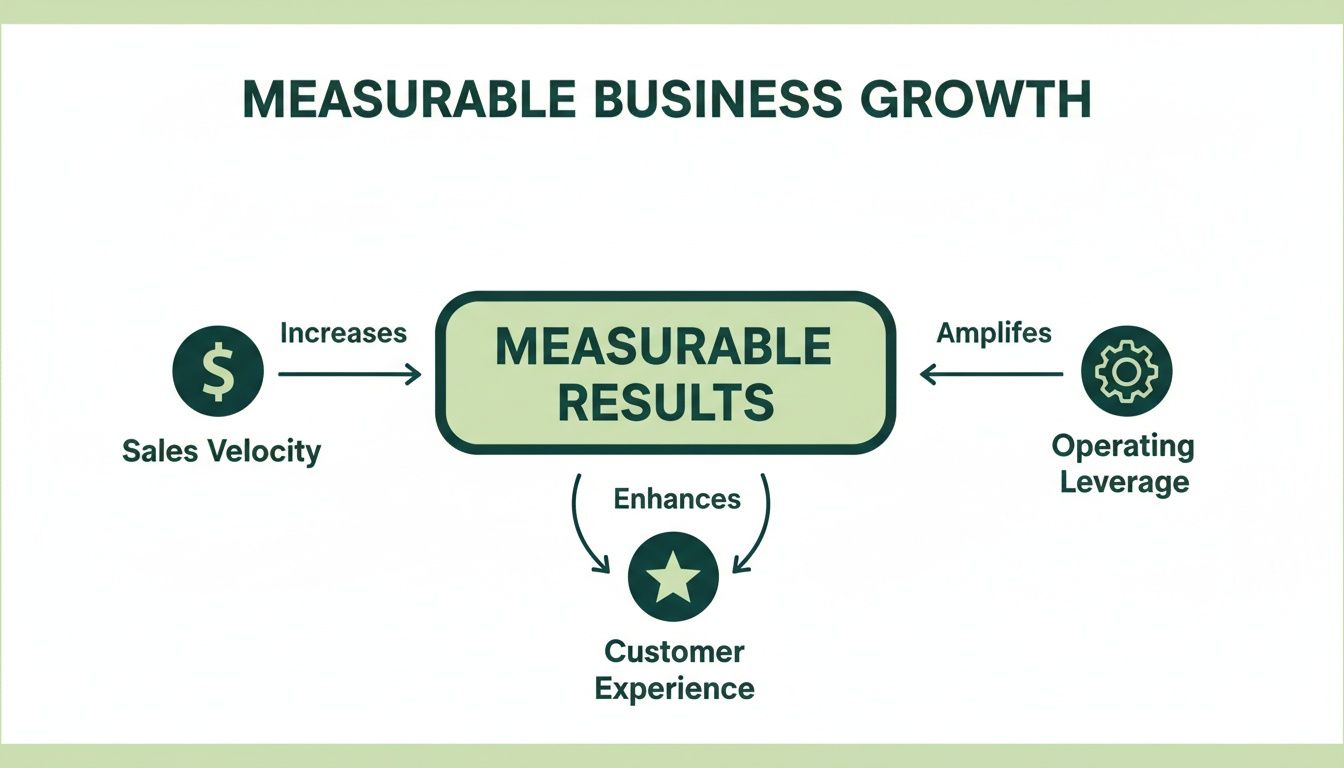
By connecting the systems you already rely on, you directly enhance sales velocity, create operating leverage, and deliver a superior customer experience.
A Customer Experience Layer, Not a Replacement
This "layering" strategy is how forward-thinking leaders are modernizing their operations. The broader SaaS market, where white label solutions are thriving, is projected to reach $308.37 billion by 2029. The reason is clear: businesses want to add powerful new capabilities without disrupting existing workflows.
This approach reduces time-to-market by 6-12 times compared to building from scratch. Homebuilders can launch a branded platform like Foundation almost immediately, fully integrated with their core systems.
White label software plays a crucial role in enabling a cohesive technological ecosystem; understanding the concept of platform integration is fundamental to optimizing your RevOps strategy.
Executive Takeaway: By adding a strategic customer experience layer, you can elevate your brand and gain a competitive advantage without the risk and cost of a ground-up software project. You make your existing tech stack more valuable and create a unified system that is far more powerful than the sum of its parts.
Take Control of Your Brand Through the Entire Homeowner Journey

Your brand is built on trust and consistency. Yet, for many builders, that brand promise is undermined by fragmented communication—a chaotic mix of disjointed emails, personal texts from agents, and scattered phone calls. This inconsistency doesn't just appear unprofessional; it creates anxiety for your buyers and erodes the perception of quality you work tirelessly to deliver.
The entire path a buyer travels with you, from contract signing to years after move-in, is your single greatest opportunity to reinforce your brand. A white label software platform empowers you to own this experience end-to-end. It consolidates every touchpoint into a single, branded portal, ensuring every interaction reflects the quality and professionalism of your company.
Your buyers’ experience is transformed from a fragmented, stressful process into a premium, unified journey delivered through your portal.
From Fragmented Communication to a Focused Brand Experience
The difference is stark. Instead of your sales team managing follow-ups on personal devices, buyers log into a portal—with your logo and branding—to see construction photos, access documents, and receive key milestone updates.
This modern approach delivers critical business outcomes:
It Builds Unshakeable Trust: A professional, consistent digital experience calms buyer nerves and validates their purchase decision, reducing post-contract anxiety and the risk of cancellations.
You Control the Narrative: You move from a reactive communication model to a proactive, standardized system, allowing you to manage expectations and guide the customer conversation.
It Drives Higher Satisfaction and Referrals: A smooth, transparent process is a direct path to higher customer satisfaction scores, positive online reviews, and powerful word-of-mouth referrals.
A white label platform ensures the digital experience you deliver is as well-crafted as the homes you build. It transforms your customer journey from a potential liability into your most powerful brand-building asset.
Owning the Relationship Long After Closing
This control does not end at closing. The post-close relationship is where long-term brand loyalty is either solidified or lost. A branded homeowner portal becomes the central hub for everything from submitting warranty requests to accessing home care guides.
This single strategic move dramatically reduces the burden on your warranty team and begins the process of turning satisfied homeowners into brand advocates. By delivering a consistently excellent experience, you are not just building homes; you are building a powerful engine for the referrals and repeat business that will fuel your growth for years.
How to Evaluate a White Label Partner
Selecting a white label software partner is a strategic decision with long-term implications for your brand, operations, and growth trajectory. The right partner acts as a seamless extension of your team, enabling efficiency and delighting customers. The wrong one adds complexity, creates data silos, and undermines the very experience you aim to improve.
As an executive, you must look beyond feature lists and slick demos. The true test is whether a vendor provides an enterprise-grade solution that understands the complex reality of the homebuilding industry.
Beyond the Feature Checklist: What Truly Matters
A polished user interface is table stakes. The critical differentiators are found in the platform’s architecture, integration capabilities, and the provider's business philosophy. Your evaluation must be grounded in questions that reveal a partner's ability to support your scale and protect your most valuable assets: your data and customer relationships.
Before signing a contract, your team must pressure-test any potential vendor on these non-negotiables:
Enterprise-Ready Security & Access: Do they support Single Sign-On (SSO)? For any scaling builder, this is essential. SSO provides secure, one-click access for your team using their existing corporate credentials, eliminating password management headaches.
Deep Integration Capabilities (APIs): A true partner will have robust, well-documented APIs that allow for seamless, automated connections between their platform and your core systems (CRM, ERP, etc.). This is the key to eliminating manual data entry and creating operational efficiency.
Absolute Data Ownership: Who owns the customer data? The only acceptable answer is: you do. The contract must state unequivocally that your data is yours to access, export, and control at any time.
Proven Homebuilding Expertise: Does the vendor understand the nuances of the homebuyer journey, from a pre-drywall orientation to a 1-year warranty walk? A partner with deep industry experience will have built a platform that speaks your language and solves your specific operational challenges.
The goal is to find a technology partner that reduces complexity, not one that adds another siloed system to your tech stack. The right platform should feel like a natural extension of your brand and operations from day one.
Making this decision requires a clear framework. As you weigh your options, our guide on the build vs. buy dilemma provides an essential framework that every leader should review. Ultimately, a rigorous vetting process is the only way to select a partner that will help you achieve your most critical business goals.
Vendor Evaluation Checklist for Executives
Use this checklist to cut through sales pitches and assess a vendor's strategic fit with your long-term business objectives.
Evaluation Category | Key Questions to Ask | Why It Matters for Your Business |
|---|---|---|
Technical Scalability & Integration | Can you provide your API documentation? How does your platform integrate with custom or legacy systems like our ERP? | A weak or poorly documented API is a major red flag. It signals that integrations will be costly and unreliable, preventing you from creating a truly connected and automated technology ecosystem. |
Data Ownership & Security | Where in the contract does it explicitly state that we retain 100% ownership of our customer data? What is your data export process if we terminate the partnership? | Ambiguity around data ownership is a deal-breaker. You need ironclad assurance that your customer relationships remain your asset and that you can retrieve your data without restriction. |
Strategic Partnership & Support | Who will be our dedicated point of contact? What is your long-term product roadmap, and how do you incorporate client feedback from builders like us? | You are not just buying software; you are entering a long-term relationship. A strategic partner is invested in your success, listens to your needs, and continuously evolves their product to solve real-world industry problems. |
Homebuilding Industry Expertise | Share a case study of how you solved a specific operational challenge for a builder of our size and type. How does your platform handle industry-specific workflows like change orders or construction milestone updates? | Generic software solutions fail to address the unique complexities of homebuilding. A true industry partner has translated those challenges into platform features, ensuring faster adoption and greater value for your team. |
Executive Takeaway: The answers you receive will reveal whether a vendor is merely a software seller or a genuine strategic partner equipped to support your growth.
The Future is a Connected Customer Experience
Adopting a white label platform is more than a technology upgrade; it’s a fundamental shift in your operating model. It transforms the homebuyer journey from a series of disconnected, offline interactions into a single, cohesive asset that you can manage, measure, and monetize.
This strategic move directly addresses the core priorities of every homebuilding executive. It accelerates sales velocity by automating communication, creates operating leverage by reducing the inbound service load, and builds powerful brand loyalty by delivering a consistently superior experience.
From Reactive Operations to Proactive Growth
The homebuilding industry is rapidly moving toward branded, unified digital solutions. The broader white-label market is projected to reach $99.19 billion by 2026. This growth is driven by a universal business need: the ability to deliver sophisticated, branded digital experiences without the massive investment of in-house development. To see the data behind this trend, you can explore these white label marketing statistics.
A unified platform moves your teams from a reactive to a proactive posture. You are no longer just answering questions as they arise; you are anticipating buyer needs. Instead of just fighting fires, you can see them coming and prevent them entirely.
In today's competitive market, the quality of your customer experience is your most sustainable advantage. A white label platform is the most efficient and effective way to own that experience, scale it profitably, and build a brand that lasts.
Your Brand, Your Data, Your Future
This modern operating model allows you to harness customer data for powerful insights, turning satisfied homeowners into your most effective source of referrals and repeat business. Critically, it reinforces the principle that the brand, the data, and the customer relationships always belong to you—the builder.
Ultimately, choosing a white label platform like Foundation is a commitment to building a more efficient, profitable, and customer-centric business. It’s an investment in an operating model designed for the future of homebuilding.
Frequently Asked Executive Questions
Is White Label Software Secure?
Yes, provided you partner with an enterprise-ready vendor. Look for critical security features like Single Sign-On (SSO), which integrates with your corporate security protocols and allows your team secure, one-click access. This eliminates the risk associated with managing separate passwords.
Most importantly, the contract must explicitly state that you own 100% of your customer data. This is a non-negotiable term to protect your business and your customers.
How Does This Fit with Our Existing CRM and ERP Systems?
Think of it as a strategic customer experience layer, not a replacement for your core systems. A true white label platform is designed to integrate deeply with your existing technology via robust APIs.
For example, a construction milestone updated in your ERP can automatically trigger a branded, personalized communication to the homebuyer through the platform. This eliminates manual data entry, ensures data consistency across your tech stack, and increases the ROI of your existing software investments.
What’s the Difference Between White Label and Private Label?
This distinction is critical for your strategic planning.
White Label Software is a ready-to-use, market-tested product developed by one company that many businesses can rebrand and deploy as their own. The model is built for speed, reliability, and cost-efficiency.
Private Label Software is custom-built exclusively for one company to sell. While it offers more control over features, it entails significantly higher costs and much longer development timelines, mirroring the risks of building a solution from scratch.
For most builders, the white label model provides the ideal balance of speed-to-market, brand control, and strategic value.
Ready to see how a connected customer experience can drive sales velocity and create operating leverage for your business? Foundation provides the enterprise-ready platform designed to unify the entire homebuyer journey under your brand. Schedule a demo today.
More from Foundation

Technology
What's New - September 2026
WarrantyOS, from work order to payment. September’s updates bring more of the day-to-day warranty workflow into one connected experience.
Sep 30, 2026

Marketing
New Home Portal: A Builder's Guide to the Buyer Journey
Learn what a new home portal is, the core features builders need, and how it shapes the buyer-to-owner experience across closing and early ownership.
Sep 16, 2026

Marketing
Home Warranty Software: A Practical Buyer's Guide
Compare home warranty software for homebuilders. Evaluate work orders, vendor coordination, customer communication, integrations, and implementation.
Sep 15, 2026