Jan 2, 2026
In homebuilding, a quality product and location used to be enough. Today, the experience of buying and owning that home is the new competitive battleground—it’s where builders win or lose market share, protect margins, and build a brand that lasts.
This is the role of Customer Experience Management (CEM). It's not just software; it's a strategic framework for orchestrating every interaction a buyer has with your brand, from their first website visit to their final warranty request.
For homebuilding leaders, CEM is the engine for achieving critical business outcomes: accelerating sales velocity, improving team efficiency, and turning satisfied homeowners into a low-cost referral pipeline. It’s about replacing fragmented, manual processes with a seamless, predictable journey that builds buyer confidence and drives profitable growth.
From Disjointed Processes to Profitable Journeys
The traditional homebuying process is often a chaotic relay race of disjointed handoffs between sales, design, closing, and warranty teams. Buyers are lost in a sea of emails, calls, and texts, leading to anxiety, stalled deals, and frustrated teams. This operational friction is a silent killer of both profit and reputation.
CEM transforms this fragmented experience into a master-planned journey. It creates a single, cohesive path where technology and teams work in unison, turning a high-stakes transaction into a positive, brand-defining relationship.
This strategic shift from reactive fire-fighting to proactive experience design directly impacts the metrics that matter most: sales conversion, margin protection, and the long-term value of your brand.
Why CEM is a Strategic Imperative
Modern buyers don't just compare you to other builders; they compare you to the seamless digital experiences offered by Amazon, Domino's, and Starbucks. The data is clear: a staggering 86% of buyers are willing to pay more for a superior customer experience. Failing to meet this expectation is no longer an option.
A modern CEM strategy delivers measurable business results:
Accelerate Sales Velocity: A transparent, digital process builds buyer confidence, removes friction, and shortens the contract-to-close timeline.
Improve Team Efficiency: Automating repetitive updates and manual data entry frees your sales, closing, and warranty teams to focus on high-value activities that drive revenue and customer satisfaction.
Protect Margins: A streamlined warranty process with homeowner self-service portals significantly reduces unnecessary service calls and lowers operational overhead.
Drive Referrals: A great experience doesn’t end at closing. It turns happy homeowners into brand advocates, creating a powerful, low-cost sales channel. For more on this, check out these great resources on Digital Customer Experience Management.
The Takeaway for Leaders: CEM is no longer a "soft" metric. It is a strategic lever for operational excellence. By orchestrating the entire customer lifecycle through a unified platform, you build a scalable model for growth that doesn’t require adding headcount.
The High Cost of a Disconnected Buyer Journey
When sales, construction, and warranty teams operate in silos, the homebuyer is caught in the crossfire. This fragmented communication doesn’t just create a poor experience—it actively drains profit from your business by killing sales momentum, creating operational drag, and eroding brand trust.
Every manual handoff, misplaced document, and delayed response is a cut that bleeds your bottom line. A buyer waiting days for an answer from the construction team loses confidence. A closing coordinator digging through emails for a document wastes time that could be spent on the next deal. This friction opens the door for competitors who deliver a modern, transparent process.
The Real-World Costs of Inefficiency
The financial pain from a disconnected journey multiplies long after you hand over the keys. Each point of friction quietly torpedoes your long-term revenue potential.
Warranty Overload: Without a central hub for home information, every minor question—"What was that paint color?"—becomes a call that clogs your warranty team's phone lines. This reactive model is inefficient, expensive, and frustrating for everyone.
Lost Referral Revenue: An unhappy homeowner doesn't just complain; they go silent. They never become the advocate who drives high-margin sales from what should be your most powerful marketing channel: word-of-mouth.
Damaged Brand Reputation: Inconsistent communication and a messy post-close process signal disorganization. That perception makes it significantly harder for your sales team to win the next buyer.
A PwC customer experience survey revealed a dangerous "loyalty illusion": while 90% of executives believe customer loyalty is rising, only 40% of customers agree. In homebuilding, where a single referral can be worth tens of thousands in profit, this gap is a direct threat to growth.
The table below contrasts the costly, fragmented approach with a modern, unified system.
The High Cost of a Disconnected Homebuyer Experience
Business Area | Disconnected Experience (The Old Way) | Unified Experience (The Modern Way) |
|---|---|---|
Sales & Marketing | Sales reps spend hours chasing construction updates and answering repetitive buyer questions instead of selling. | Sales teams focus on new leads as buyers self-serve answers through a dedicated digital portal, accelerating the sales cycle. |
Construction | Field teams are constantly interrupted by calls and emails from sales and buyers asking for status updates. | Proactive, automated updates are sent to buyers, reducing inbound queries and keeping projects on schedule. |
Closing & Finance | Closing coordinators manually track documents from multiple sources, causing delays and costly errors. | All documents are centralized in a single digital hub, accessible 24/7 by the team and the buyer, ensuring on-time closings. |
Warranty & Service | The warranty team is swamped with calls for basic information, leading to burnout and slow response times. | Homeowners find answers instantly in their portal, drastically reducing inbound calls and operational costs. |
Brand & Referrals | Frustrated homeowners do not refer friends or family, forcing higher customer acquisition costs. | Delighted homeowners become brand advocates, driving high-quality, low-cost referral business. |
The Takeaway for Leaders: A disconnected journey is a reactive business model that forces your teams to constantly put out fires. The alternative is a proactive, unified approach where an integrated platform eliminates manual work, protects margins, and transforms your customer base into your most valuable asset.
The Blueprint for a Modern Homebuyer Experience

So, what does a modern homebuyer experience look like in practice? It’s a practical blueprint built on four pillars that directly boost sales, drive efficiency, and build unshakable brand loyalty. This isn’t about flashy tech; it’s about creating a predictable, confidence-building process for buyers and a more profitable, scalable operation for you.
As these revealing customer experience statistics show, 73% of consumers say customer experience is a critical factor in their purchasing decisions. Falling short is no longer an option.
1. A Streamlined Digital Closing Journey
Give buyers a single, branded digital portal to manage their closing. Instead of chasing documents across scattered emails, they can track milestones, upload paperwork, and see exactly what’s next in one place. This transparency eliminates the anxiety that stalls deals and frees your closing coordinators from manual follow-ups, allowing them to manage more closings without adding headcount.
2. A Centralized Homeownership Hub
The relationship doesn't end at closing. Provide a private, white-labeled portal where homeowners can find everything related to their home: warranty details, appliance manuals, maintenance reminders, and a simple way to submit service requests. This self-service model empowers homeowners and dramatically cuts the inbound calls that swamp your warranty team, turning post-close support from a cost center into an efficient, brand-building asset.
3. Proactive, Automated Communication
Replace inconsistent manual updates with proactive, automated communication. When construction hits a key milestone, the system automatically notifies the buyer. When a closing task is due, a reminder is sent without anyone on your team lifting a finger. This level of automation delivers consistency at scale, ensuring every buyer feels informed and confident throughout the entire process.
4. An Intelligent Referral Engine
Finally, turn your happiest homeowners into your most effective sales channel. By maintaining a direct line of communication through the ownership hub, you can intelligently prompt satisfied customers for reviews and referrals at the peak of their excitement. This creates a predictable, high-margin stream of new business that significantly lowers your customer acquisition costs.
The Takeaway for Leaders: These four pillars are not independent features; they are an integrated system for growth. Together, they create a modern, resilient homebuilding operation that delivers a superior experience while simultaneously improving your bottom line.
Putting Modern Technology to Work for Your Business
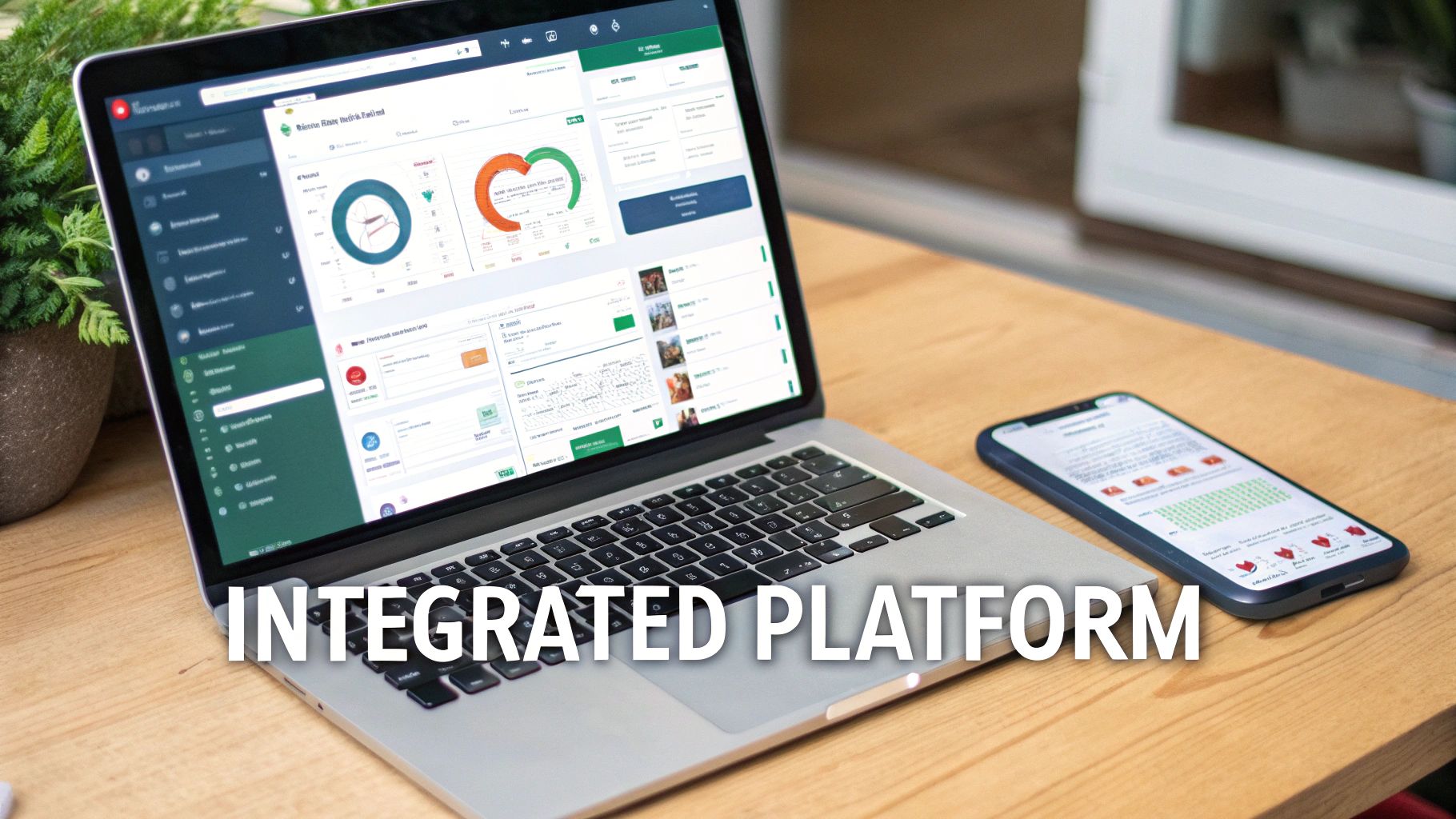
A world-class customer experience strategy requires technology designed for the realities of homebuilding. To deliver the consistency and transparency today’s buyers demand, you need an integrated platform that serves as the central hub for the entire customer journey, from contract to warranty and beyond.
This isn’t about replacing your core systems like your CRM or ERP. A modern CEM platform acts as the connective tissue—an orchestration layer that integrates with your existing technology to eliminate manual data entry and fragmented communication.
From Manual Tasks to Automated Workflows
The right technology transforms how your teams operate. It automates low-value, repetitive tasks, freeing your sales, closing, and warranty teams to focus on building relationships and solving complex problems. Smart automation, AI, and seamless integrations deliver two critical business advantages:
Consistency at Scale: Every buyer receives the same high-quality, on-brand communication at every stage. This predictability builds trust and reinforces your brand’s professionalism.
Efficient Growth: You can manage a growing pipeline of buyers and homeowners without proportionally increasing headcount, protecting your margins as you scale.
An integrated, enterprise-ready platform ensures your brand is the hero. By delivering the entire experience through a fully white-labeled portal, you control the narrative and reinforce your brand's value at every touchpoint.
The Tools That Power Modern Homebuilding
The key is to view technology as a strategic asset, not just a tool. A purpose-built buyer experience platform should include:
A Digital Closing Concierge: A secure portal for buyers to track milestones, manage documents, and complete tasks, helping you close deals faster and with greater confidence.
A White-Labeled Homeowner Portal: A self-service resource for warranties and home information that dramatically reduces inbound calls to your warranty team.
Intelligent Workflow Automation: The engine that connects your existing systems to automate updates, tasks, and communication, ensuring nothing falls through the cracks.
The Takeaway for Leaders: Modern technology is about building a more resilient and profitable business. It transforms your customer experience from a series of disjointed, manual efforts into a smooth, automated engine for predictable growth.
Measuring the ROI of Your Customer Experience
You cannot manage what you do not measure. A modern customer experience strategy must generate a clear, quantifiable return on investment that directly impacts your bottom line. By focusing on the right key performance indicators (KPIs), you can connect your experience initiatives directly to revenue growth and operational efficiency.
A true CEM platform provides the data to connect actions to outcomes, giving you a real-time dashboard on the health of your business. This is about making data-driven decisions that protect margins and accelerate growth.
Key CEM Metrics for Homebuilder Leaders
For executives, a few key metrics matter most because they directly reflect sales velocity, operational load, and future referral revenue. Tracking these KPIs is the first step toward building a predictable growth engine. For a deeper dive, review these key strategies for measuring customer experience.
Here are the performance indicators that should be on every homebuilder leader's dashboard.
KPI | What It Measures | Why It Matters for Homebuilders |
|---|---|---|
Customer Satisfaction (CSAT) | Buyer sentiment at critical milestones like contract, pre-construction, and closing, measured with simple, targeted surveys. | Pinpoints specific friction points in your process, allowing you to fix issues that slow down sales and erode buyer confidence. |
Net Promoter Score (NPS) | A homeowner’s willingness to recommend your company, typically measured 30-90 days post-closing. | Directly predicts your potential for referral business. A high NPS is a leading indicator of a strong brand and a low-cost sales pipeline. |
Warranty Resolution Time | The average time it takes to acknowledge and resolve a homeowner's service request from submission to completion. | Measures post-close operational efficiency. Faster resolution times reduce administrative costs and are critical for maintaining homeowner goodwill. |
Referral Conversion Rate | The percentage of referred leads that become signed contracts, directly tracking revenue generated from happy homeowners. | This is the ultimate proof of ROI. It quantifies how effectively your customer experience is creating new, high-margin business. |
The Takeaway for Leaders: By connecting these metrics within a single platform, you gain a holistic view of your business. You can see how a seamless closing experience (high CSAT) leads to enthusiastic brand advocates (high NPS), which in turn drives profitable growth (high referral conversion rate)—all without adding complexity or headcount. This is how customer experience becomes a strategic asset.
Building Your Customer Experience Roadmap
Modernizing your customer journey doesn’t require a disruptive overhaul. A smart CEM strategy is a phased approach that starts by identifying the biggest points of friction in your current process. Is it a clunky closing? A reactive warranty system? A nonexistent referral program?
By pinpointing the most significant revenue leaks and operational drags, you can focus on quick wins that build momentum and prove the ROI of your investment.
Choosing the Right Technology Partner
The right technology partner provides more than just software; they offer a strategic advantage. As you evaluate platforms, prioritize capabilities that support scalable growth and protect your brand’s integrity.
Look for these non-negotiables:
A Fully White-Labeled Experience: Your brand—not a software vendor’s logo—should be front and center at every touchpoint. This is critical for building a seamless, trustworthy journey.
Deep System Integrations: The platform must connect seamlessly with your core systems (CRM, ERP) to automate workflows and create a single source of truth for your team.
Enterprise-Ready Support: Your partner should provide concierge-level support to ensure a smooth implementation and ongoing success, allowing your team to focus on their core responsibilities.
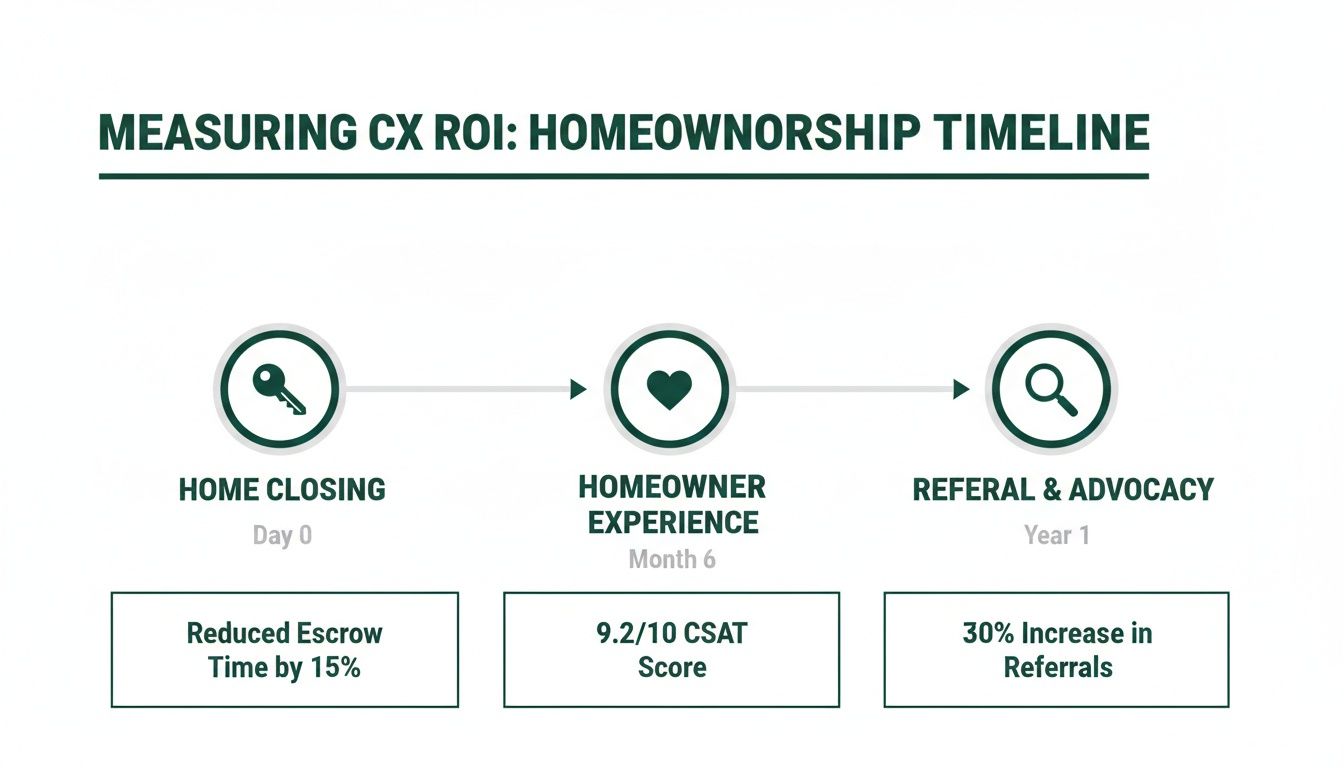
The timeline below illustrates how the customer journey extends far beyond closing, generating long-term value through homeowner satisfaction and referrals.
The Takeaway for Leaders: Investing in an integrated CEM platform is not an expense; it's an investment in a more resilient, efficient, and profitable business. It transforms your customer base into a sustainable growth engine that protects margins and accelerates sales for years to come.
Common Questions from Homebuilding Leaders
Adopting a new platform can seem like a significant undertaking. Here are straightforward answers to the questions we hear most often from executives.
How does this platform actually reduce warranty costs?
An effective CEM platform prevents many warranty issues from becoming service calls in the first place. By providing homeowners with a self-service digital hub containing all their home's information, common questions are answered instantly, and potential service calls disappear. For legitimate requests, a clean, digital ticketing system replaces chaotic emails and phone tag, routing issues to the right person immediately. This shift dramatically reduces unnecessary truck rolls and administrative overhead, directly lowering your operational costs.
Will implementing this disrupt our business operations?
No. A modern platform built for homebuilders should integrate seamlessly with your existing tech stack—your CRM, ERP, and construction software. The technology must adapt to your workflows, not the other way around. A strong technology partner handles the heavy lifting of implementation, ensuring a smooth rollout that automates manual tasks and connects your data without disrupting your sales, closing, or construction teams.
Modern technology should remove friction, not create it. An enterprise-ready platform empowers your teams by making the tools they already use work better together.
What is the real, measurable ROI?
The return on investment impacts your bottom line from multiple angles. First, increased sales conversions result from a transparent, confidence-building buying journey. Second, you achieve a significant boost in operational efficiency by automating repetitive tasks, allowing your team to handle more volume without adding headcount. Finally—and most powerfully—you unlock a new, high-margin revenue stream. A superior experience turns happy homeowners into a powerful, automated referral engine, transforming a traditional cost center into a reliable driver of profitable growth.
Ready to turn your customer experience into your most powerful competitive advantage? See how Foundation helps top homebuilders unify the entire buyer journey, from contract to close and beyond. Explore the Platform.
More from Foundation

Technology
What's New - September 2026
WarrantyOS, from work order to payment. September’s updates bring more of the day-to-day warranty workflow into one connected experience.
Sep 30, 2026

Marketing
New Home Portal: A Builder's Guide to the Buyer Journey
Learn what a new home portal is, the core features builders need, and how it shapes the buyer-to-owner experience across closing and early ownership.
Sep 16, 2026

Marketing
Home Warranty Software: A Practical Buyer's Guide
Compare home warranty software for homebuilders. Evaluate work orders, vendor coordination, customer communication, integrations, and implementation.
Sep 15, 2026