Jan 4, 2026
For homebuilder executives, a unified customer experience is not a marketing buzzword—it's a core operating model that directly impacts sales velocity, team capacity, and long-term profitability. It means strategically architecting every buyer interaction—from contract to closing and into ownership—into a single, seamless, and professionally branded journey. This isn't just about customer satisfaction; it's a strategic lever for eliminating the costly operational drag caused by fragmented communication and manual workflows.
From Necessary Evil to Strategic Advantage
Let's be candid: in the demanding world of homebuilding, 'customer experience' can often feel disconnected from the daily pressures of selling homes and managing construction timelines.
The traditional homebuilder operating model is fragmented by design. Sales lives in a CRM, construction managers rely on specialized software or spreadsheets, and the warranty team operates in its own silo. This structure forces homebuyers into a confusing maze of contacts and platforms, leading to frustration, anxiety, and a constant barrage of "just checking in" calls that drain your team's capacity and focus.
A unified customer experience strategy fundamentally re-engineers this broken process.
It recognizes that the most critical phase of the journey—where brand trust is either solidified or eroded—begins after the contract is signed. Instead of leaving this high-stakes period to chance, it treats the entire path from contract to close and into the warranty period as a single, controllable, and scalable operation.

Connecting Systems to Drive Real Business Outcomes
A modern approach doesn't require ripping and replacing your core systems of record. A customer experience layer like Foundation is designed to connect to your existing CRM, construction software, and ERP. It functions as the central communication hub, pulling critical data—like construction milestones from your field software or closing dates from your ERP—and transforming it into proactive, automated updates for the homebuyer.
This integrated model directly solves the most persistent pain points for builders:
Fragmented Communication: It eliminates ad-hoc emails and texts, replacing them with a standardized, builder-branded communication flow that reinforces professionalism and control.
Manual Follow-Up Burden: It automates routine status updates, liberating sales, closing, and construction teams to focus on high-value activities that drive revenue and move projects forward.
Inconsistent Brand Representation: It ensures every buyer receives the same high-caliber, professional experience, regardless of which team member they interact with.
Lack of Leadership Visibility: It provides executives with a clear, real-time dashboard of buyer engagement and satisfaction, turning anecdotal feedback into actionable data.
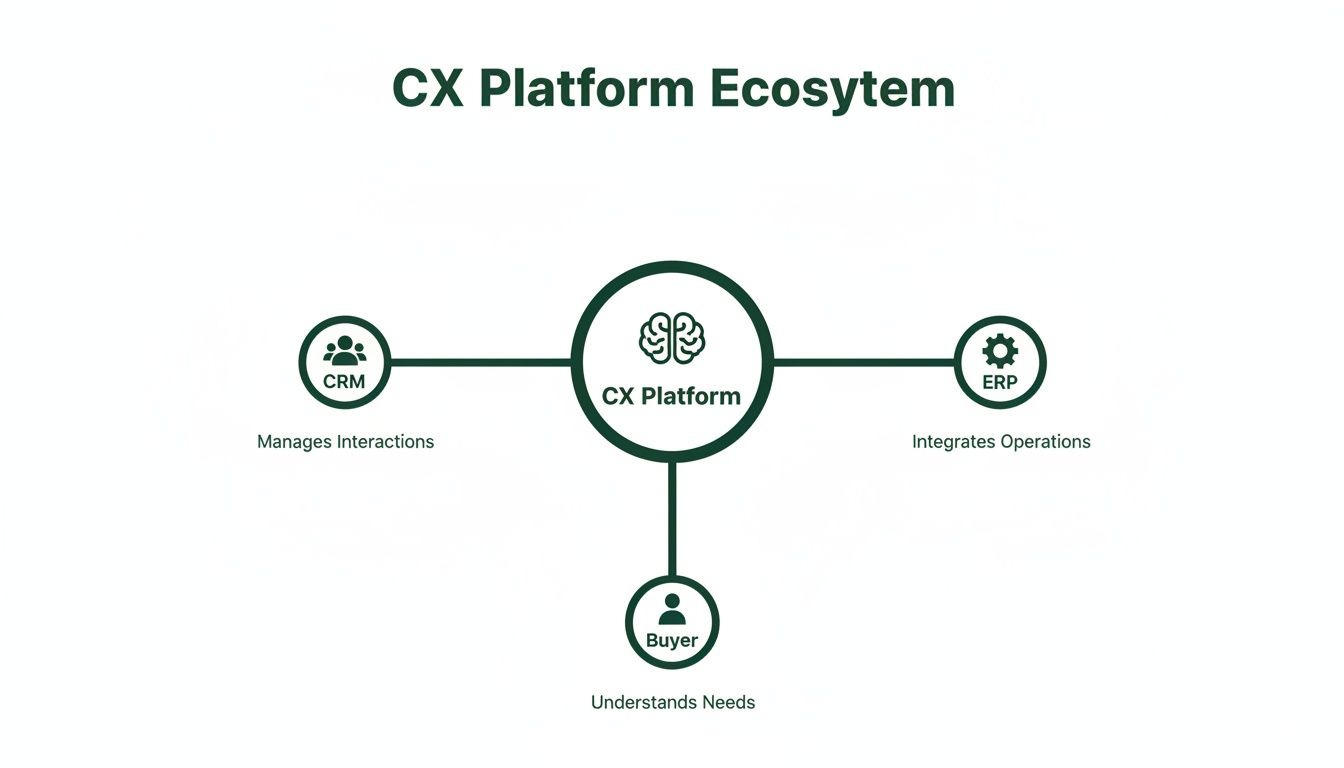
A unified customer experience puts the homebuyer at the center of a connected ecosystem. It leverages real-time data from your core systems to deliver a seamless, relevant journey that builds confidence and trust at scale.
To fully grasp the strategic importance, it’s helpful to understand what is customer experience management (CXM) as a business discipline. It is the practice of designing and reacting to customer interactions to meet or exceed their expectations, which directly drives loyalty, positive reviews, and profitable referrals.
The operational difference is stark. The table below contrasts the legacy, fragmented approach with the modern, unified model.
Fragmented vs. Unified Customer Experience
Business Area | Fragmented Experience (The Old Way) | Unified Experience (The Modern Model) |
|---|---|---|
Sales & Closing | Teams buried in reactive, low-value follow-ups. | Teams freed up for proactive, high-value sales activities. |
Buyer Communication | Inconsistent, manual emails & texts from multiple people. | Proactive, automated, and branded updates from a single source. |
Operational Efficiency | High overhead from constant inbound calls and manual tasks. | Increased team capacity and operating leverage without adding headcount. |
Brand Perception | Anxious, confused buyers; inconsistent brand experience. | Confident, happy buyers; strong, professional brand perception. |
Referrals & Reviews | Left to chance, often negative due to frustration. | A reliable pipeline of positive reviews and referrals. |
Leadership Visibility | Blind spots in the post-contract journey; anecdotal data. | Clear, data-driven insights into buyer satisfaction and process bottlenecks. |
Executive Takeaway: Unifying the customer journey transforms a high-friction, high-cost part of your business into a powerful engine for growth. It accelerates closings, creates significant operating leverage by increasing team capacity, and builds the brand trust that fuels a predictable referral pipeline. This isn't just about service; it's about building a more efficient, profitable, and scalable homebuilding operation.
Winning the Post-Contract Journey to Protect Margin and Brand Equity
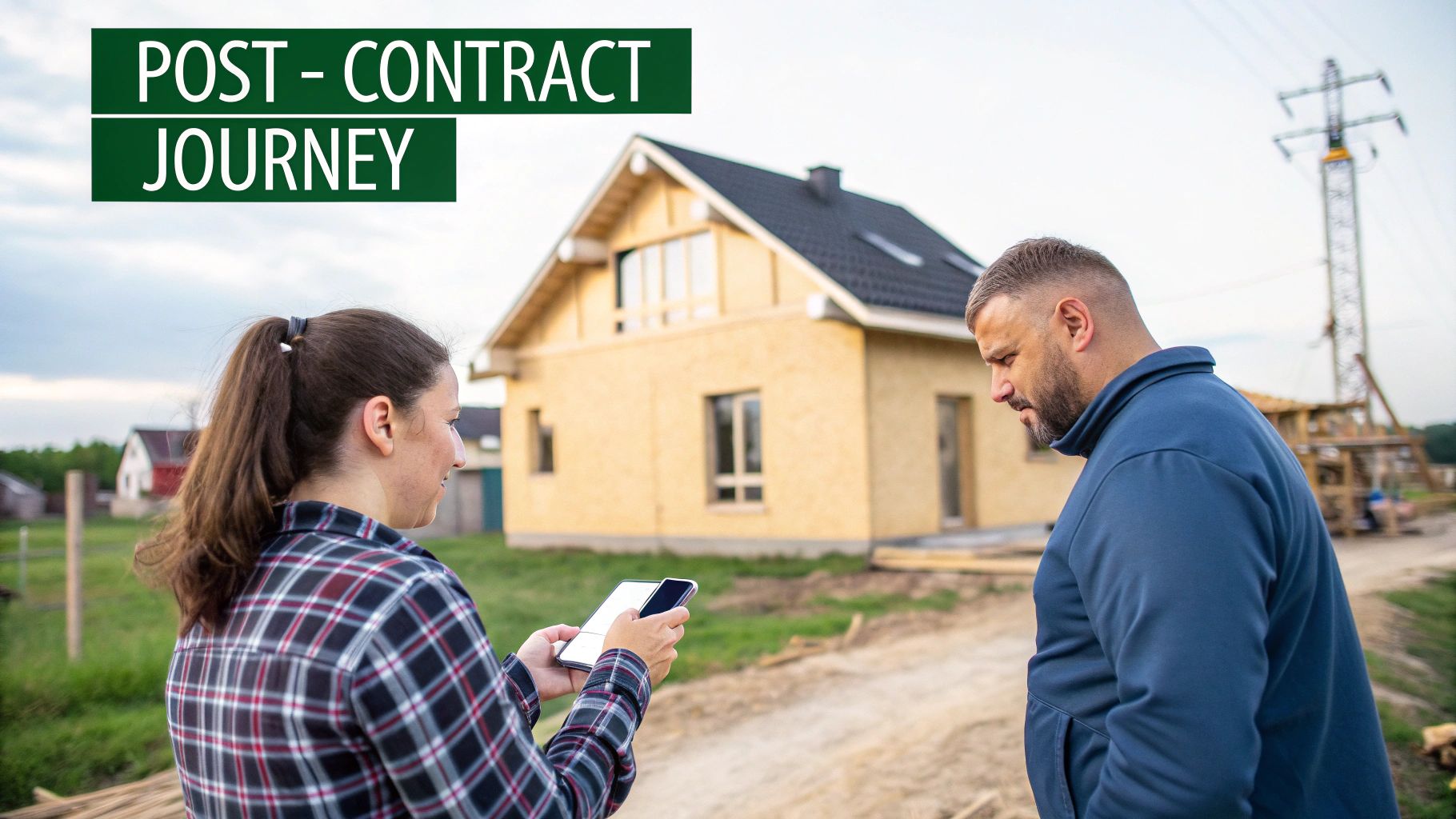
For most homebuilders, the sales process marks the peak of buyer satisfaction. The true test of your brand and operations begins the moment a contract is signed. This critical journey—from executed agreement to closing day and beyond—is where you either forge a loyal advocate for life or see that initial excitement erode into frustration and distrust.
Without a unified system, this phase is an operational liability. It devolves into a chaotic mix of offline communication, fragmented updates from different departments, and a buyer left in the dark, growing more anxious with each passing week. This forces your sales team into a defensive posture. Instead of pursuing new deals, they are consumed by fielding repetitive questions about construction timelines and closing dates. Every manual follow-up is a hidden cost, draining team capacity and pulling focus from revenue-generating activities.
From Cost Center to Competitive Advantage
Legacy thinking treats the post-contract phase as a cost center—an operational burden to be managed. Forward-thinking leaders, however, recognize it as a significant competitive advantage waiting to be unlocked.
By implementing a customer experience layer like Foundation, builders can finally connect the dots between their CRM, construction management software, and ERP systems. This integration is the key to transforming the entire journey. Reactive, manual work becomes proactive, automated engagement. It establishes a single source of truth for the homebuyer, eliminating confusion and building confidence. The result is a seamless, professionally branded experience that operates efficiently at scale, without adding headcount.
This is a strategic imperative, not just a customer service initiative. Data consistently shows a sharp decline in homebuyer satisfaction post-move-in, particularly during the warranty phase. Builders who lack a structured unified customer experience strategy see their Net Promoter Scores plummet, directly choking off their referral pipeline. The connection is clear: investing in the post-sale and ownership experience is directly tied to brand loyalty and future revenue.
Measurable Outcomes of a Unified Post-Sale Journey
Unifying this experience delivers clear, measurable returns that resonate with every executive. We are not talking about vague promises of "happier buyers," but tangible improvements to operational efficiency and financial performance.
Here’s what that looks like in the real world:
Reduced Administrative Load: Automating routine status updates and document delivery slashes inbound calls and emails, freeing up hundreds of hours annually for sales, closing, and construction teams to focus on value-added work.
Increased Sales Capacity: When sales agents are no longer acting as post-contract support, they can dedicate their time to lead nurturing and closing new deals. This drives more sales velocity from your existing team.
Fewer Panicked Inquiries: Proactive, consistent communication keeps buyers informed and confident, dramatically reducing anxious, workflow-disrupting check-in calls.
Smoother Closings: A central hub for tasks, documents, and key dates ensures all parties are aligned, leading to faster, more efficient closings with fewer last-minute emergencies.
The post-contract journey is the ultimate litmus test of your brand's promise. A unified experience protects your margin by increasing operational efficiency and secures future revenue by building the trust that fuels referrals.
Executive Takeaway: An investment in the post-contract and ownership experience is a direct investment in your operational efficiency and customer loyalty. It creates a smooth, low-friction handoff into the warranty period, setting the stage for positive reviews, repeat business, and a brand reputation that actively drives growth. It turns a historically painful process from a liability into a powerful strategic asset.
The Technology Blueprint for a Unified Customer Journey
Implementing a unified customer experience does not mean overhauling your core operational systems. The strategic goal for homebuilding executives is not to start from scratch, but to unlock more value from the technology you already rely on.
The key is to view a dedicated customer experience platform as the connective layer—the central nervous system—that links your CRM, ERP, and construction management software.
Your CRM holds customer data. Your ERP manages financials. Your construction software tracks the build. Each is essential, but they often operate in silos. A customer experience layer acts as the orchestrator, integrating signals from each system and translating them into consistent, branded, and automated communication with your homebuyer. It is an integration strategy, not a replacement strategy. It shields buyers from the complexity of your internal operations and provides them with a single source of truth, delivering the right information at the right time—without manual intervention from your team.
From Siloed Data to an Orchestrated Experience
In a typical fragmented setup, data is trapped in departmental systems. A construction milestone is updated in your project management tool, but that information doesn't automatically trigger a notification to the buyer. This gap creates the need for manual follow-ups, introduces human error, and leads to inconsistent messaging—all of which erode buyer confidence.
A customer experience layer is architected to bridge these gaps. It connects to your core systems via APIs and pre-built integrations to create an intelligent, automated workflow.
CRM Integration: Pulls buyer and contract data to automatically initiate the post-sale journey the moment a deal closes.
Construction Software Integration: Monitors key milestones—foundation poured, framing complete—to trigger proactive, branded progress updates.
ERP Integration: Connects to financial data to streamline closings and document delivery.
The most effective technology strategies don't force you to start over; they make the systems you already depend on more valuable. A customer experience layer is the missing link that connects your operational data to your customer's reality.
This integrated model shifts your teams from being reactive messengers to proactive managers. When a construction manager updates a schedule, the homebuyer receives a professional, on-brand notification without a sales agent ever having to get involved.
Unlocking Capacity and Reducing Operational Drag
The ultimate business outcome of this technology blueprint is operating leverage. By automating routine updates and standardizing document delivery, you immediately reduce the administrative burden on your teams. This can be further streamlined with solutions like modern Interactive Voice Response (IVR) systems to manage inbound calls, freeing up your team for more critical tasks.
The ripple effect across the business is significant:
Increased Sales Velocity: Sales agents reclaim hundreds of hours previously lost to post-contract administration, enabling them to focus exclusively on selling more homes.
Improved Team Efficiency: Closing coordinators and construction managers spend less time on repetitive inquiries and more time on high-value tasks that accelerate project timelines.
Reduced Inbound Volume: Proactive communication answers common buyer questions before they are asked, leading to a dramatic reduction in inbound calls and emails.
Executive Takeaway: This blueprint creates a scalable model for customer engagement. It enables you to deliver a premium, consistent experience across every community and division without increasing headcount. This is how you transform customer experience from a cost center into a powerful, data-driven engine for profitable growth.
From Unified Experience to Measurable Business Impact
A unified customer experience is more than a tool for buyer satisfaction; it is a direct investment in your operational efficiency and long-term financial health. For leadership, the critical question is always: What is the impact on the P&L? The answer is that a modern CX model directly improves the core metrics that define a successful homebuilding business—from sales velocity and operating margin to brand equity and referral rates.
When your core systems—CRM, construction, and ERP—are integrated through a customer experience layer like Foundation, the entire organization benefits. The platform acts as the central hub, turning siloed operational data into a seamless journey that drives measurable business outcomes.
Sales Performance and Velocity
The most immediate financial impact is on sales capacity. By liberating your sales agents from the administrative burden of post-contract follow-up, you redirect their focus to revenue generation. This is not about working harder; it's about making their time more valuable.
Increased Selling Capacity: Automating buyer updates can reclaim weeks of selling time per agent annually. This allows your existing team to manage a larger pipeline and close more homes without adding headcount.
Higher Conversion from Referrals: A consistently exceptional experience turns satisfied homeowners into your most effective sales channel. High-quality referrals convert at a significantly higher rate, lowering your overall customer acquisition cost.
Marketing and Brand Equity
Marketing is tasked with building a brand that attracts buyers and commands loyalty. A unified customer experience is the most powerful tool for achieving this, turning every buyer's journey into a tangible demonstration of your brand promise.
Improved Referral Velocity: An automated system can proactively prompt satisfied homeowners for reviews and referrals at peak moments of happiness, creating a predictable and scalable pipeline of high-intent leads.
Stronger Brand Equity: Consistency builds trust. When every buyer receives the same professional, branded communication, your reputation for quality and reliability grows, strengthening your market position.
Operational and Warranty Efficiency
Operational drag is a silent killer of margin. Every inbound call, manual update, and disorganized closing process adds incremental costs that compound over time. A unified CX model directly attacks this inefficiency, creating a leaner, more resilient operation.
In a market defined by rising costs and fluctuating interest rates, builders must compete on service. The data is clear: builders who master the entire homeowner journey are better positioned to generate referrals and repeat business—the lifeblood of margin protection. You can read more about why builder confidence is linked to future sales expectations on nahb.org.
A unified approach transforms your customer experience from an unpredictable cost center into a managed, efficient operation. The ROI is measured in reduced administrative overhead and increased team capacity.
The operational wins are clear:
Reduced Inbound Call Volume: Proactive, automated updates can eliminate up to 40% of inbound "just checking in" calls, freeing up your sales, closing, and construction teams to focus on their core responsibilities.
Faster, More Predictable Closing Cycles: A central hub for communication and tasks reduces friction and last-minute emergencies, resulting in smoother, faster closings.
Lower Warranty 'Noise': A seamless transition into ownership, with a dedicated portal for documents and service requests, reduces low-priority warranty calls, allowing your team to focus on legitimate issues.
Executive Takeaway: A unified customer experience is an operating model that delivers tangible returns across every department. It builds a stronger brand, a more efficient team, and a more profitable business—positioning you to win in any market.
The Executive Playbook for Implementation
A powerful strategy is ineffective without a clear implementation plan. Transitioning to a unified customer experience is an operational evolution, not just a technology project. It requires aligning your people, processes, and technology toward a single, seamless buyer journey. This playbook is designed for executive leadership to steer this transformation, focusing on business outcomes and creating capacity without increasing headcount.

Phase 1: Audit and Align
Before considering new technology, conduct an objective assessment of your current state. The first step is to map the entire post-contract journey from the buyer's perspective—not your internal one.
Assemble a cross-functional team of leaders from sales, marketing, construction, and closings. Your mission is to document every touchpoint, email, phone call, and handoff. The goal is to identify every point of friction: where manual follow-up is required, where communication breaks down, or where your brand promise is compromised.
This audit is not about assigning blame; it's about establishing a shared understanding of the problem. When every leader sees the same operational drags and agrees on their business impact, you secure the buy-in needed for meaningful change.
This process illuminates the hidden costs of a fragmented experience, from sales hours lost chasing construction updates to administrative delays that stall closings.
Phase 2: Digitize and Automate
With a clear map of the friction points, it's time to implement the technology. Phase two involves deploying a customer experience layer that serves as the connective tissue for your core systems. A platform like Foundation connects your CRM, construction software, and ERP, creating a central hub for all buyer communication.
The immediate priority is intelligent automation that creates capacity for your teams.
Automate Proactive Updates: Integrate your construction software to automatically trigger branded, personalized milestone updates. This single action can eliminate a significant volume of "just checking in" calls.
Centralize Documents and Tasks: Provide buyers with a single, builder-branded portal where they can access documents, view their closing checklist, and find answers to common questions 24/7.
Standardize Communication: Replace ad-hoc emails and texts with a consistent, professional communication flow that enhances your brand at every step.
This phase is about systematically removing manual, repetitive tasks from your team's workload, freeing them to focus on activities that accelerate sales and closings.
Phase 3: Measure and Optimize
The final phase is a continuous cycle of measurement and refinement. A unified platform provides unprecedented visibility into buyer engagement, allowing you to manage what you can measure.
Establish and track clear KPIs tied directly to business objectives. These should be hard metrics reflecting operational and financial gains:
Operational Efficiency: Monitor the reduction in inbound call volume and the decrease in your average contract-to-close cycle time.
Sales Capacity: Measure the increase in productive selling time for your sales team now that they are unburdened by administrative tasks.
Customer Loyalty: Track your Net Promoter Score (NPS) throughout the journey and into ownership to quantify brand health and referral potential.
This data-driven approach enables you to prove the financial return of your CX investment and continuously optimize the experience. It also provides the flexibility to adapt to shifting market demands.
Executive Takeaway: This three-phase playbook is designed for scalable success. You can pilot the model in a single division to prove the concept and ROI, then confidently roll it out across the enterprise. Modernizing your customer experience is a fundamental upgrade to your operating model that builds a durable competitive advantage.
Common Questions from Homebuilding Leaders
Adopting a new operating model inevitably raises practical questions. For executives evaluating a unified customer experience, primary concerns often revolve around implementation, cost versus return, and the impact on already lean teams.
Here are answers to the most common questions from homebuilder leaders.
Will a Unified CX Platform Replace Our Current Systems?
No. This is a critical distinction. A unified customer experience platform is not designed to replace your core operational systems. It is the missing communication layer that connects them and makes them more valuable.
Your CRM remains your system of record for leads and sales pipeline management.
Your ERP remains the financial and operational backbone of your business.
Your Construction Software remains the specialized tool for managing the build cycle.
A platform like Foundation integrates with these systems, pulling key data to orchestrate the journey after the contract is signed. It automates communication and centralizes documents, enhancing the value of your entire tech stack by focusing on a seamless, branded homebuyer journey. It fills a critical gap; it does not create redundancy.
How Does This Help Us Increase Sales Without Adding Headcount?
The answer is operating leverage. A unified platform provides a significant efficiency gain for your sales team.
Currently, your sales agents likely spend a substantial portion of their time on low-value, post-contract administrative tasks—answering repetitive questions, chasing construction updates, and managing the closing process.
A unified CX platform automates this routine communication. By providing homebuyers with a self-service portal and proactive, automated updates, you eliminate the need for most manual check-ins.
This reclaimed time is the key to unlocking growth. The hours your team gets back are immediately funneled into high-value activities: nurturing new leads, making strategic follow-up calls, and ultimately, closing more homes.
The result is a direct, measurable increase in sales velocity from your existing team, enabling revenue growth without a corresponding increase in overhead.
Our Teams Are Overloaded. How Difficult Is Implementation?
This is a valid concern for any lean organization. Modern, enterprise-ready platforms are designed for a low-friction implementation that reduces your team’s workload, not adds to it.
Implementation is typically managed by the platform provider's dedicated team. Their experts handle the technical integrations with your CRM and other systems, configuring workflows to match your specific processes. They do the heavy lifting.
Once configured, the platform is designed to run with a high degree of automation. It begins reducing manual follow-ups from day one, simplifying daily tasks for your teams. Training focuses on how the system saves them time and makes their jobs easier. The entire purpose is to create capacity, not consume it.
What Is the Real ROI and How Quickly Can We See It?
The return on investment is multi-faceted, measurable, and visible in both the short and long term.
Quantitative ROI (Visible within 3-6 months):
Reduced Inbound Communication: Expect a significant drop (30-40%) in inbound buyer calls and emails, translating directly into time saved across multiple teams.
Increased Sales Team Capacity: Within the first six months, you can measure the reclaimed time your sales agents dedicate to revenue-generating activities versus administrative support.
Faster Closing Cycles: Centralized communication and task management make the contract-to-close process more predictable and efficient.
Qualitative & Long-Term ROI (Visible within 6-18 months):
Improved Customer Satisfaction: Track a measurable lift in metrics like Net Promoter Score (NPS), a leading indicator of brand health and loyalty.
Stronger Referral Pipeline: A consistently positive experience transforms homeowners into a reliable source of high-quality, low-cost referrals, driving future revenue.
Reduced Brand Risk: Standardized, professional communication mitigates the brand damage caused by inconsistent messaging and a disjointed buyer journey.
Executive Takeaway: Leading builders view this not as a software expense, but as a strategic investment in operational efficiency, brand equity, and long-term enterprise value. It is about building a scalable operating model that drives profitable growth.
Ready to transform your buyer journey from a fragmented process into your greatest competitive advantage? With Foundation, you can unify the entire customer experience from contract to close and beyond, creating more capacity for your teams and building a brand that homeowners trust.
More from Foundation

Technology
What's New - September 2026
WarrantyOS, from work order to payment. September’s updates bring more of the day-to-day warranty workflow into one connected experience.
Sep 30, 2026

Marketing
New Home Portal: A Builder's Guide to the Buyer Journey
Learn what a new home portal is, the core features builders need, and how it shapes the buyer-to-owner experience across closing and early ownership.
Sep 16, 2026

Marketing
Home Warranty Software: A Practical Buyer's Guide
Compare home warranty software for homebuilders. Evaluate work orders, vendor coordination, customer communication, integrations, and implementation.
Sep 15, 2026