Jan 18, 2026
Effective digital marketing isn't about vanity metrics or chasing trends. For homebuilder executives, it's a strategic operating model that accelerates sales velocity, boosts conversion rates, and creates significant operating leverage—directly impacting your bottom line.
It's about translating every online interaction into measurable business outcomes that drive predictable growth, enhance team capacity, and deliver a superior customer experience from first click to final warranty claim.
Translating Digital Marketing into Executive Outcomes
Any investment in marketing must solve real-world operational challenges. Fragmented communication, manual follow-ups, inconsistent brand representation across divisions, and limited visibility into buyer engagement aren't just marketing problems; they are business problems that actively slow down growth and erode profitability.
A modern digital strategy tackles these core issues head-on. The goal isn't just generating more website leads; it's building a more efficient and resilient business. This requires a shift in thinking: see digital marketing not as a series of disconnected campaigns, but as the engine driving a cohesive customer experience that produces tangible financial results.
Moving Beyond Tactical Metrics
Too many marketing scorecards get stuck on tactical fluff like website traffic or social media engagement. While those numbers have their place, they don't inform executive-level decisions. A forward-thinking approach connects every digital touchpoint back to a high-level business objective.
This means measuring success based on outcomes that a CEO, COO, or VP of Sales cares about:
Accelerated Sales Velocity: How quickly are we moving buyers from initial inquiry to a signed contract? Can we shorten that timeline without adding headcount?
Improved Conversion Rates: Are we converting more qualified leads into homeowners, thereby increasing revenue per sales team member?
Increased Operating Leverage: Can our teams manage more customers more effectively, reducing the cost per closing and freeing up capacity?
Enhanced Customer Satisfaction & Referrals: Are we delivering a consistent, modern experience that builds trust, reduces warranty load, and drives high-quality referrals?
When you anchor your efforts to these KPIs, digital marketing transforms from a cost center into a powerful tool for predictable growth, with a clear return on investment.
For builders, the real value of digital isn't just lead generation. It’s creating a scalable system that saves hundreds of hours for your sales teams, reduces the warranty load, and turns happy homeowners into your most effective, low-cost sales channel.
The Strategic Advantage of an Integrated System
A successful digital strategy is built on an integrated ecosystem, not a patchwork of standalone tools. Your CRM, construction management software, and ERP are the essential pillars of your operation. The missing piece for most builders is the customer experience layer that connects them all.
This layer, powered by a platform like Foundation, serves as the connective tissue between your core systems. It standardizes communication and automates the routine, repetitive workflows that consume your team's time. It ensures every buyer receives the same high-quality, on-brand experience, regardless of which sales agent or division they interact with.
This integrated approach modernizes the entire buyer journey without adding complexity or requiring more staff. By automating post-contract updates and centralizing communication, you empower your team to focus on high-value activities—like selling more homes and building lasting relationships. The result is a more efficient organization, higher customer satisfaction, and a powerful referral engine that fuels long-term revenue.
Building a Digital Foundation for Predictable Growth
Before allocating budget to advertising, you must get your digital house in order. Too many homebuilder websites function as passive online brochures—beautiful, but ineffective at capturing buyer intent and initiating sales conversations. This approach leaves growth to chance and forces a reliance on expensive third-party listing sites that own the customer relationship, not you.
A better way is to think of your digital foundation as a powerful, company-owned lead generation engine. This strategy transforms your website from a passive gallery into the central hub of your marketing ecosystem, creating a direct line from a buyer’s online curiosity into your sales pipeline. The goal is simple: own your traffic, control your brand story, and generate a predictable stream of high-quality leads.
Your Website Is Your Primary Sales Office
The modern home search begins online, long before a prospect considers visiting a model home. Recent data confirms that buyers are leaning on digital research more than ever.
This makes your website the main digital showroom, where many buyers begin their search. You can explore more of these digital marketing trends for homebuilders to see the full picture. This behavioral shift means your website must be engineered to convert.
A Mobile-First Imperative: A staggering 69% of buyers use a phone or tablet to search for homes. A fast, intuitive mobile experience is not a "nice-to-have"—it's a requirement for competing effectively. A slow or clunky mobile site sends motivated buyers directly to your competitors.
Interactive Tools, Not Just Photos: Buyers prioritize photos (41%) and detailed property info (39%). Elevate this by providing interactive floor plans and virtual tours that allow them to visualize life in the home. This deep engagement provides invaluable data on their preferences.
Calls-to-Action (CTAs) That Drive Business: Every page should guide the visitor toward the next logical step. "Schedule a Tour," "Download Community Guide," or "Join VIP List"—your CTAs must be clear, compelling, and designed to convert an anonymous visitor into a named lead in your CRM.
Winning the Local Search Battle
For homebuilders, all marketing is local. Your best customers are searching within specific cities, counties, and school districts. This is where a sharp technical SEO strategy and a meticulously managed Google Business Profile (GBP) provide a decisive competitive advantage.
Think of your GBP as your digital storefront on Google Search and Maps. A well-optimized profile ensures your communities, sales offices, and model homes appear at the exact moment a buyer is looking. This is often their first impression of your brand. A strong profile with high-quality photos, current hours, and a steady stream of positive reviews builds immediate trust and drives action—phone calls, website clicks, and directions to your sales center.
Your digital foundation is more than just a website; it’s an operating model for growth. It reduces marketing waste, improves lead quality, and provides the data infrastructure needed to understand your buyers on a deeper level.
By focusing on these foundational elements, you build a powerful online presence that attracts, engages, and converts the right buyers efficiently. This isn't just a marketing task—it's a strategic imperative that directly impacts sales velocity, team capacity, and your bottom line for years to come.
Finding the Right Marketing Channels for High ROI
Every homebuilder executive grapples with the same core question: Where should I invest limited marketing dollars for the best return? The answer lies not in a single silver bullet, but in a carefully balanced, multi-channel approach designed to capture buyers ready to act now while simultaneously building a brand that attracts future customers.
A strategic digital approach for homebuilders goes beyond simply "being online." It involves a calculated allocation of resources to the channels that deliver qualified prospects close to a purchase decision. Getting this right optimizes spend, improves lead quality, and solidifies your reputation as the go-to builder in your market.
Tying Your Budget to Real Business Goals
The most effective marketing plans are always anchored to specific business goals. Are you launching a new community and need to generate initial buzz? Or are you focused on selling the last few homes in an established development? Each scenario demands a different channel mix and investment level.
A strategic approach balances two distinct channel types:
Demand Capture: These are your direct lines to buyers actively searching for a new home. This includes paid search (PPC) and SEO, where you appear the moment someone searches "new construction homes in [your city]."
Demand Generation: These channels build awareness and nurture interest over the long term. Paid social media and content marketing help you stay top-of-mind with future buyers and build trust long before they are ready to sign a contract.
Your budget should reflect this balance. Looking ahead to 2026, top U.S. homebuilders are dedicating a significant portion of their budgets to digital. We're seeing 35-40% of total spend going to digital advertising on platforms like Google, social media, and key listing sites. Another 20-25% is allocated to organic marketing, covering your website, SEO, and content creation.
Prioritizing the Channels That Actually Work
While every market has unique characteristics, a handful of core channels consistently deliver results for homebuilders. Focusing your efforts here provides a solid foundation for predictable growth and makes it easier to scale your marketing as your business expands.
1. Paid Search (PPC)
Paid search on platforms like Google Ads is your direct pipeline to high-intent buyers. When someone types "build on your lot [county]" or "luxury home builder [neighborhood]," your brand must be the first thing they see. This is precision-guided marketing to capture active demand. The most effective campaigns are hyper-local, targeting specific zip codes and linking to landing pages that directly address the searcher's query.
2. Paid Social Media
Platforms like Facebook and Instagram are visual powerhouses, perfect for showcasing your homes and communities. They allow for sophisticated targeting based on demographics, life events (like "recently married" or "expecting a child"), and specific interests. The goal is to tell your brand’s story through stunning photos, video tours, and testimonials from happy homeowners. A high ROI depends on effective audience segmentation for real estate marketing, enabling you to craft personalized messages that resonate with different buyer personas.
A common mistake is treating all digital channels the same. Paid search is for capturing immediate intent, while paid social is for creating it. Using both in concert allows you to fill your current sales pipeline while building a stronger one for the future.
3. Content Marketing and SEO
Content marketing is how you demonstrate expertise and answer the questions your buyers are asking. By creating helpful blog posts, community guides, and virtual tours, you attract organic traffic through search engines. This is a long-term strategy, but it pays dividends by reducing your reliance on paid ads over time and creating a sustainable, low-cost flow of leads. Each piece of content should solve a specific problem for the buyer, from navigating the construction process to understanding financing. This approach doesn't just generate leads; it pre-qualifies them by providing value upfront. You can see how these integrated strategies can put your lead generation on autopilot.
When you combine these channels thoughtfully, you create a system where each part strengthens the others. A prospect might first see your brand in a compelling social ad, then find your website through a Google search, and finally decide to reach out after reading a helpful guide. This integrated journey positions your brand as a trusted partner, not just another builder.
Connecting Marketing to Sales and the Customer Journey
Generating a new lead is just the starting point. The true test of a marketing strategy is what happens after the first click. How effectively do you convert that initial interest into a signed contract and, eventually, a happy homeowner who becomes a source of referrals?
For many homebuilders, this is where the process breaks down. The handoff from marketing to sales is often a "black box" of manual follow-ups, fragmented email threads, and inconsistent communication. This disconnect doesn't just slow down sales; it consumes your team's valuable time and creates a poor buyer experience. Real growth is achieved by designing a seamless, branded journey that connects the first ad a buyer sees to their final warranty request. This is not just good customer service—it's a superior operating model that directly boosts your bottom line.
Bridging The Gap With Intelligent Automation
Your sales team’s most valuable resource is time. How much of it is lost to repetitive, low-impact tasks like sending follow-up emails, appointment reminders, or answering the same questions repeatedly? This inefficiency opens the door to human error and creates an inconsistent experience for buyers.
Intelligent automation changes the game by systematizing the routine communication that defines the early stages of the buyer's journey. By connecting your marketing platforms directly to your CRM, you can implement automated lead nurturing flows that qualify, educate, and engage potential buyers at scale, without manual intervention.
Imagine a new lead comes in and automatically receives:
A personalized welcome email referencing the specific community they viewed.
Two days later, a follow-up with a link to a virtual tour of the floor plan they showed interest in.
A week later, an email from their assigned sales agent with a direct link to schedule a call.
This system ensures every lead receives prompt, consistent, and relevant follow-up, freeing your sales team to focus their expertise on high-intent buyers ready for a conversation. The goals are simple: save time, scale consistency, and improve team performance.
Creating A Unified Customer Experience Layer
Your core systems—CRM, construction software, and ERP—are essential for running the business, but they were not built to manage the customer’s experience. A dedicated customer experience layer like Foundation is critical. It acts as the connective tissue, linking your internal systems to create a single, unified journey for the buyer.
This layer does not replace your existing technology. It sits on top of your tech stack, pulling data from each system to offer a cohesive, branded portal for your customers. From the moment they sign a contract, buyers have one central place for updates, documents, and communication. This eliminates confusion and the need to chase down answers.
The flow below illustrates how different marketing channels work together to guide buyers into this unified journey.
Paid search, social media, and content marketing all work to funnel high-intent buyers toward a central point, ensuring the brand experience is consistent from the very first interaction.
The greatest risk in the homebuying process is a communication breakdown. An integrated customer experience layer de-risks the entire journey by centralizing communication and giving leadership full visibility into buyer engagement.
Measuring What Truly Drives Revenue
Without an integrated system, it is nearly impossible for leadership to get a clear, complete picture of the customer lifecycle. You may know how many leads marketing generated, but connecting that activity to actual sales velocity, customer satisfaction, or future referral value is mostly guesswork.
A unified platform provides unprecedented visibility. Leaders can track engagement at every stage, identifying which buyers are highly engaged and which may be at risk. For a deeper dive, check out this practical guide to customer journey analytics. This insight allows you to manage what matters and make decisions based on data, not assumptions.
To put this in perspective, let's look at how different channels perform for builders.
Digital Marketing Channel ROI for Homebuilders
The table below breaks down the typical Return on Investment (ROI) and strategic purpose for key digital marketing channels in homebuilding. It serves as a guide for allocating your budget to achieve the best results.
Channel | Typical ROI | Strategic Focus | Key Performance Indicator (KPI) |
|---|---|---|---|
PPC (Paid Search) | 250-300% | Capture high-intent buyers actively searching for new homes | Cost Per Lead (CPL), Conversion Rate |
SEO & Local Search | 200-250% | Build long-term organic visibility and local authority | Organic Traffic, Keyword Rankings, GMB Views |
Paid Social Media | 150-200% | Generate awareness and top-of-funnel leads via targeting | Reach, Engagement Rate, CPL |
Email Marketing | 400%+ | Nurture leads, re-engage past prospects, and drive referrals | Open Rate, Click-Through Rate (CTR), Conversions |
Content Marketing | Varies | Educate buyers, build trust, and support SEO efforts | Time on Page, Shares, Lead Magnet Downloads |
Customer Referrals | 500%+ | Generate low-cost, high-quality leads from happy homeowners | Number of Referrals, Referral Close Rate |
As the data shows, returns vary, but a well-integrated strategy amplifies the results of every channel. Industry data for 2026 highlights this trend: while overall lead volume saw a slight dip, conversion efficiency jumped by nearly 11%. This improvement was driven by higher-quality leads from SEO (38%) and referrals (26%). It's clear proof that connecting your channels to a seamless journey delivers predictable revenue.
When you connect your marketing, sales, and post-close experience, you create a powerful flywheel. A great buying experience leads to higher satisfaction, which reduces warranty headaches and generates more high-value referrals. Those referrals, in turn, feed your marketing engine for sustainable, profitable growth.
Driving Long-Term Value Through the Ownership Experience
For most homebuilders, the relationship effectively ends at closing. In reality, closing day marks the beginning of your greatest opportunity for long-term, low-cost growth.
The experience you deliver after the sale directly influences your warranty load, brand trust, repeat business, and your most valuable lead source: referrals. Extending your digital strategy into homeownership is not just a customer service initiative; it's a calculated business decision that transforms satisfied homeowners into a high-performing sales channel.
From Closing Binder to Branded Ownership Hub
The clunky binder filled with manuals and warranty pamphlets is an outdated source of friction, forcing homeowners to dig through paper to find a paint color or a service contact. This analog process creates a steady stream of inbound calls and warranty tickets, consuming your team's time and resources.
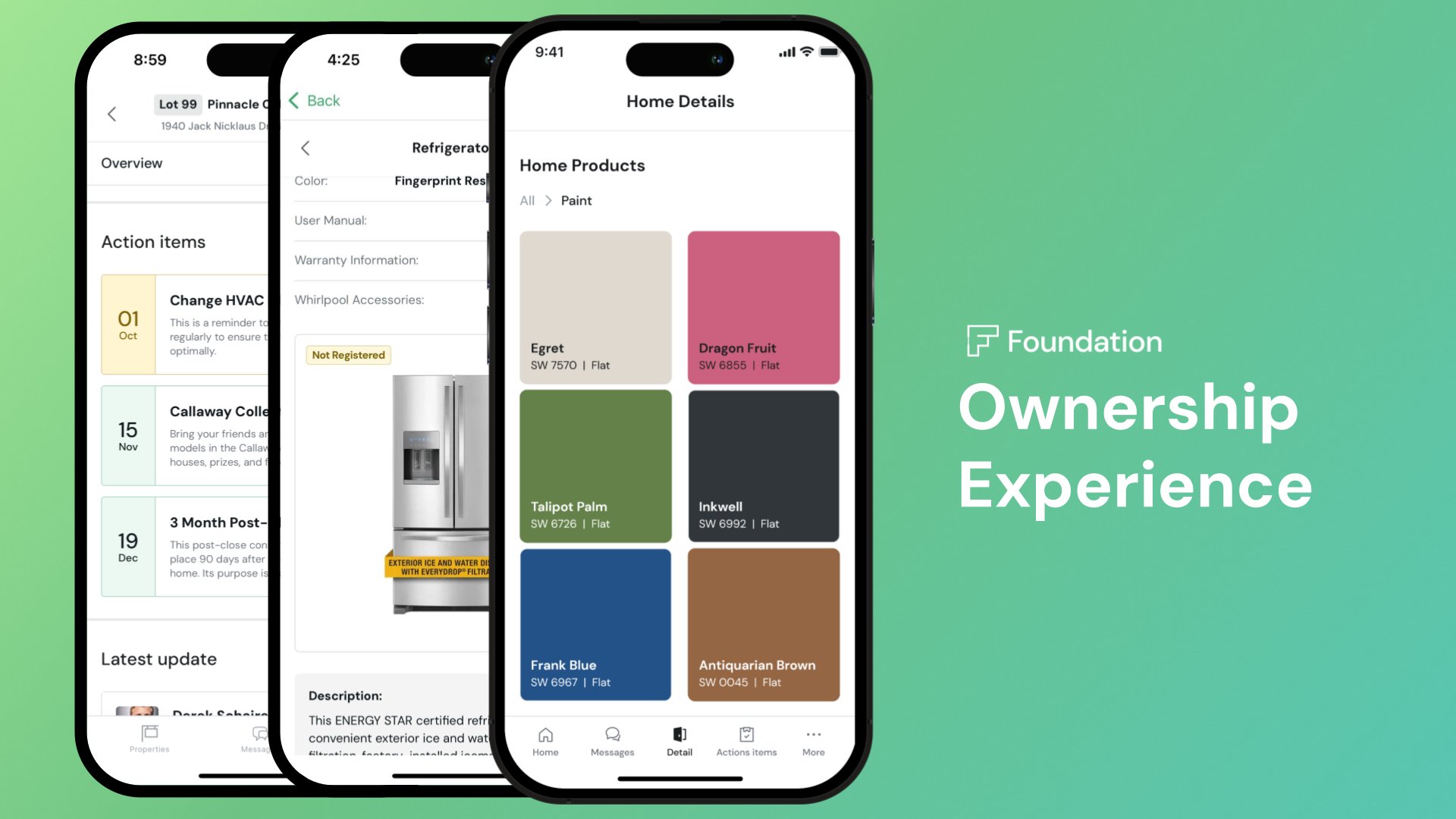
The modern approach replaces the binder with a branded, digital Ownership Hub—a single source of truth for the homeowner, accessible anytime from their phone or computer. Instead of calling your office, they log in to find:
All closing documents and home specifications.
Interactive warranty information and a simple service request system.
A complete digital record of every selection, finish, and fixture.
A hub like this, powered by a platform such as Foundation, is not just a better experience for the homeowner. It's a significant operational win, automating routine inquiries and organizing service requests to improve team efficiency.
Activating Your Owner Network for Referrals
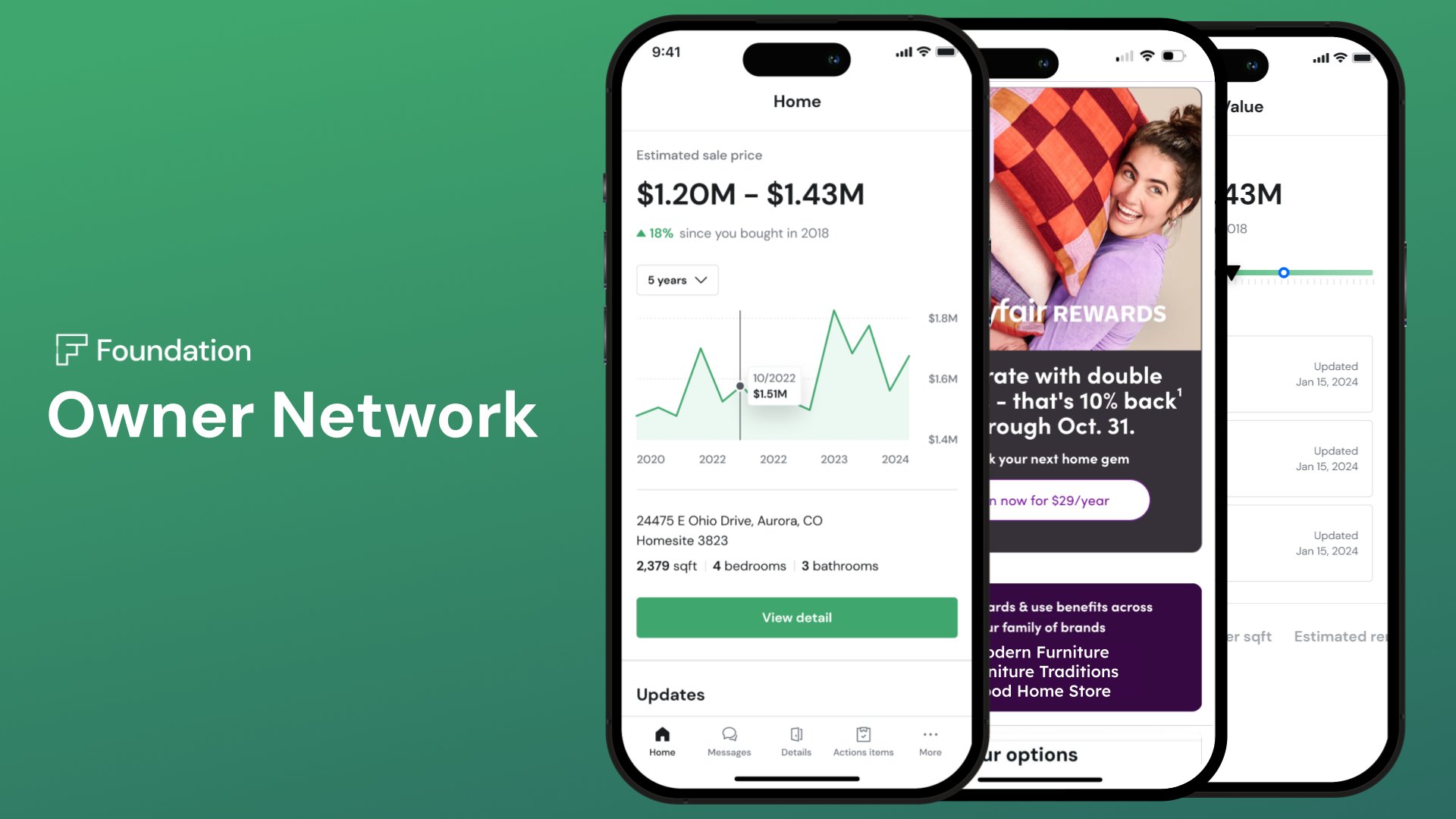
Your past buyers are a powerful, untapped referral engine. Referrals are consistently the highest-converting, lowest-cost leads you can acquire. Yet, most builders approach them passively, hoping for the best.
An intelligent ownership platform provides a system to proactively nurture this Owner Network. This isn't about sending generic holiday emails; it's a strategy for maintaining a valuable relationship that keeps your brand top-of-mind.
The real value of an ownership experience platform is transforming your entire customer base into a proactive, low-cost marketing channel. You shift from passively hoping for referrals to actively generating them at scale.
By connecting this experience to your CRM, you can re-engage past buyers with smart, automated messages that feel relevant—a check-in on their one-year home-iversary or a targeted update when a new phase opens in their community. It’s personalized, valuable, and all under your brand's control.
Tying the Post-Close Experience to the Bottom Line
A well-executed ownership experience delivers clear, measurable business outcomes that impact the bottom line and increase the long-term value of your company.
Reduced Operational Load: A digital hub deflects a significant number of routine warranty and service calls, increasing team efficiency without adding headcount.
Accelerated Referral Velocity: By systematizing communication with past buyers, you create a predictable pipeline of high-trust leads that close faster and at a higher rate.
Increased Customer Lifetime Value: A seamless ownership experience builds fierce brand loyalty, making homeowners more likely to buy from you again or recommend you to their network.
Improved Brand Reputation: In a competitive market, a modern, consistent post-close experience is a powerful differentiator that protects and enhances your brand.
The takeaway for leadership is clear: your digital strategy should not stop at the closing table. By extending the digital journey into homeownership, you are not just providing good service—you are building a powerful operational asset that reduces costs, drives high-margin revenue, and creates a sustainable competitive advantage.
Measuring What Matters: The Executive-Level Scorecard
As a leader, you need a clear line of sight from marketing investment to bottom-line results. Marketing scorecards often get bogged down in vanity metrics—website traffic, social media likes—that fail to demonstrate business impact.
An executive-level scorecard cuts through the noise. It focuses squarely on the key metrics that define the health and profitability of your business. This isn't about tracking every click; it's about measuring the outcomes that matter to your CEO, COO, and VP of Sales, and repositioning marketing as a direct driver of revenue, not just a cost center.
From Tactical Noise to Strategic Signals
To achieve this, your scorecard must reflect the entire customer lifecycle, not just the top of the funnel. This level of clarity is only possible by integrating your marketing platforms with your CRM and a customer experience system like Foundation. This connection allows you to trace a dollar spent on a Facebook ad campaign directly to a closed home and a future referral.
Focus your reporting on these core business metrics:
Sales Velocity: What is the average time from a lead's first contact to a signed contract? A decrease indicates greater efficiency in your marketing and sales process.
Cost Per Acquisition (CPA): Move beyond Cost Per Lead to understand the total marketing and sales cost required to acquire one homebuyer. This is your true measure of efficiency.
Lead-to-Close Rate: Of all qualified leads, what percentage become homeowners? This KPI reveals the quality of your leads and the effectiveness of your sales process.
Customer Lifetime Value (CLV): This crucial metric looks beyond the initial sale to include the projected value of referrals and repeat business, highlighting the long-term revenue impact of a superior customer experience.
The Power of an Integrated View
When your systems are connected, leadership can finally see the complete picture and answer strategic questions with real data. Which channels are delivering our most profitable buyers? How does our post-close experience impact our referral rate? Where are the true bottlenecks in our sales cycle?
By shifting the focus to these outcomes, you transform marketing meetings from tactical debates into strategic conversations about predictable, scalable growth. Every dollar invested can be tied to a measurable return.
Ultimately, this data-driven approach ensures your digital marketing is a core part of your operating model. It proves that a modern customer experience is not a luxury, but the most direct path to improving team capacity, accelerating revenue, and building a stronger, more profitable business.
A Few Questions We Hear Often
When we speak with homebuilding executives, the same strategic questions consistently arise. Before investing in a new operational model, you need clear answers.
How Much Should a Homebuilder Really Budget for Digital Marketing?
While every market and growth plan is different, a solid benchmark is to allocate 2.5% to 3.5% of your annual revenue for your total marketing spend. Within that budget, earmark 55-65% for digital channels. This reflects the reality that today's buyers conduct the vast majority of their research online before ever speaking with a sales agent.
What’s the Single Biggest Mistake Builders Make with Digital Marketing?
The most common and costly mistake is failing to connect marketing with the post-lead experience. Many builders excel at generating leads but fail to nurture them effectively, creating a disjointed journey from contract to closing and beyond. This creates operational drag, results in lost sales, and delivers an inconsistent brand experience that erodes trust and eliminates the potential for referrals. An integrated platform is the only way to solve this and ensure a seamless experience for every buyer.
How Can We Actually Measure the ROI of Our Digital Spend?
You cannot manage what you do not measure. To get a true picture of ROI, you must integrate your marketing platforms with your CRM and a dedicated customer experience layer. This creates a clear line of sight from the first ad click to the final sale and even tracks post-close referrals. It allows you to confidently state, "This channel generated this much revenue," and prove that digital marketing is a powerful profit center, not just a line-item expense.
Ready to turn your buyer journey into a measurable, scalable asset? See how Foundation connects your systems to deliver a modern customer experience that accelerates sales and boosts efficiency. Schedule a demo today.
More from Foundation

Technology
What's New - September 2026
WarrantyOS, from work order to payment. September’s updates bring more of the day-to-day warranty workflow into one connected experience.
Sep 30, 2026

Marketing
New Home Portal: A Builder's Guide to the Buyer Journey
Learn what a new home portal is, the core features builders need, and how it shapes the buyer-to-owner experience across closing and early ownership.
Sep 16, 2026

Marketing
Home Warranty Software: A Practical Buyer's Guide
Compare home warranty software for homebuilders. Evaluate work orders, vendor coordination, customer communication, integrations, and implementation.
Sep 15, 2026